
Overview
LINK CLAMPS
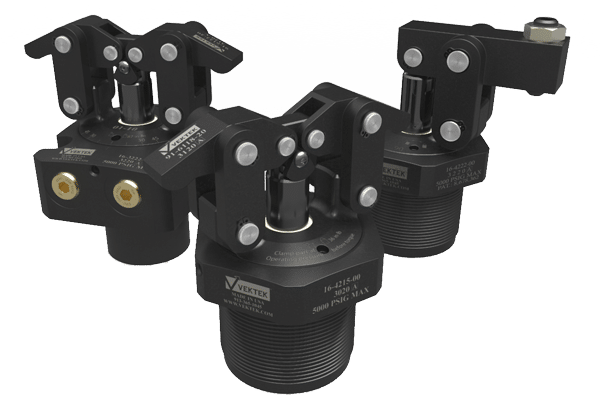
The link clamp arm pivots up and out of the way to accommodate hard-to-reach or hard-to-hit clamping points. Link clamps contain the beam mechanism often preferred by fixture builders. This self-contained beam eliminates the need to build or design a clamp mechanism as part of the fixture. Vektek’s unique body and pivot design provides the least side-to-side axial deflection and the most rigid product on the market today.
The new Tufflink™ 360° is outfitted with a rotary lug to provide full rotational positioning of the lever. Compare the flexibility of Tufflink™ 360° to others on the market that provide limited positioning.
Cutaways

S/A TuffLink™ 360°
Cutaway
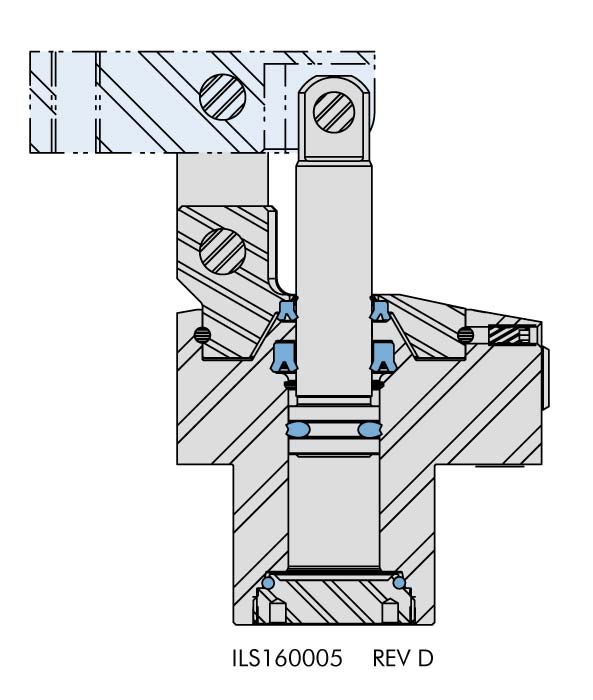
D/A TuffLink™ 360°
Cutaway

High Pressure
Cutaway

Low Pressure
Cutaway
Force Tables and Graphs
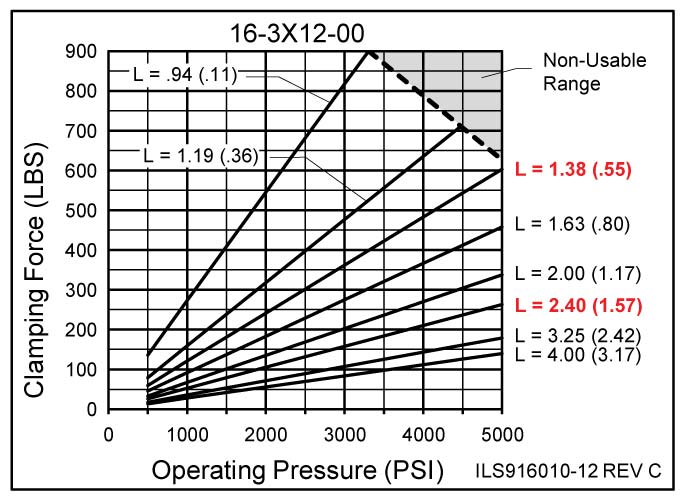
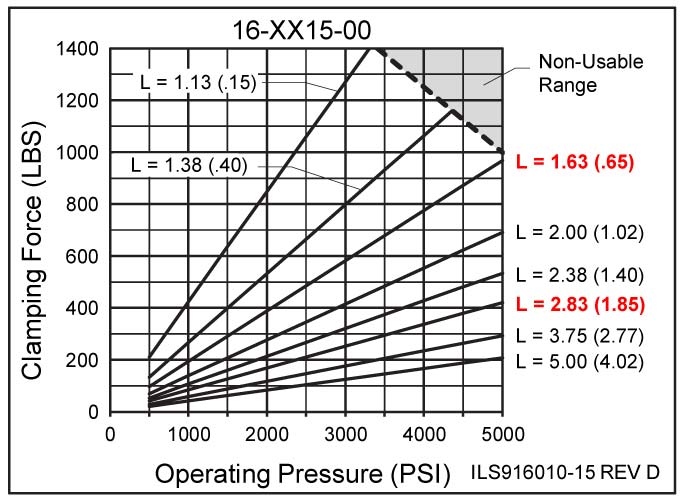
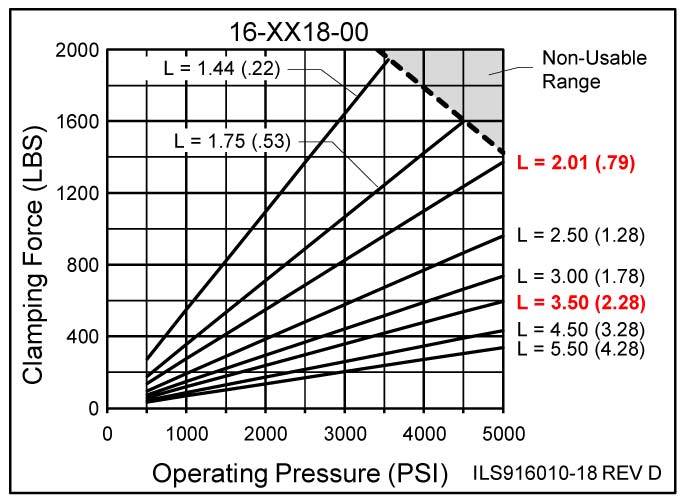
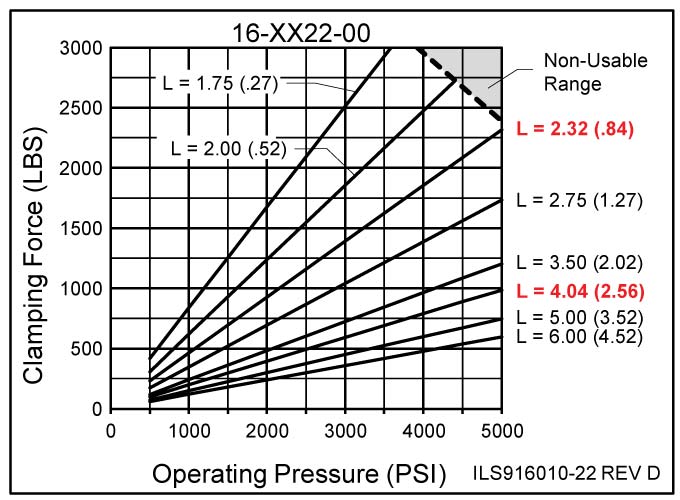
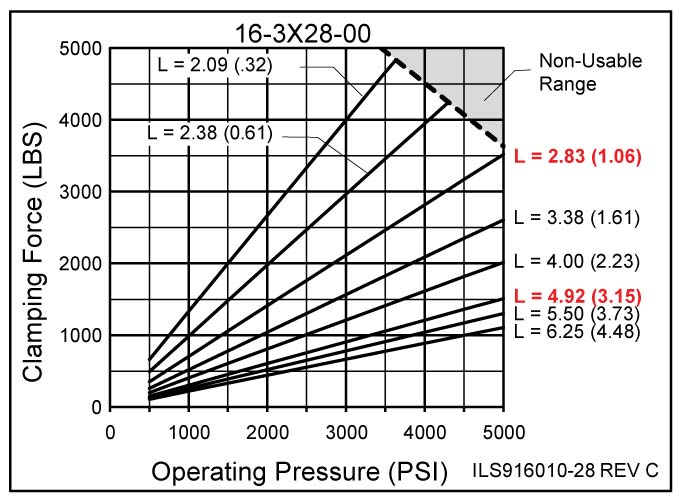
5,000 PSI TuffLink 360 Lever Output Curves
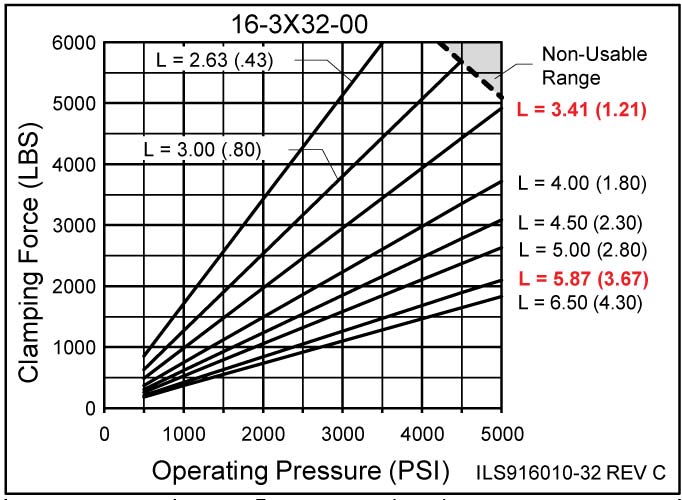
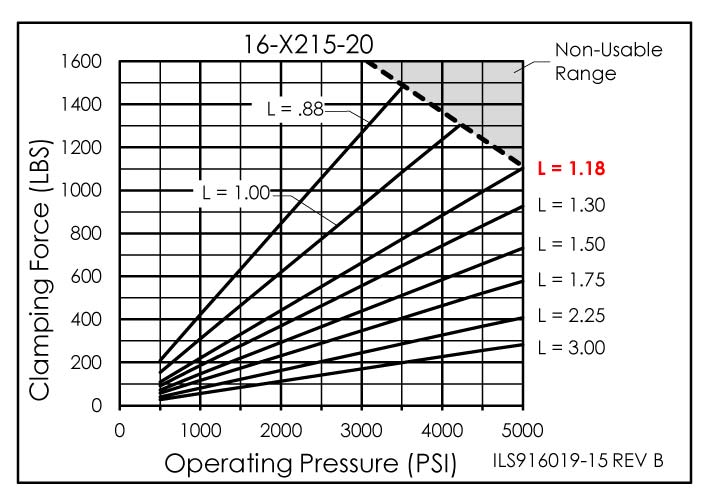
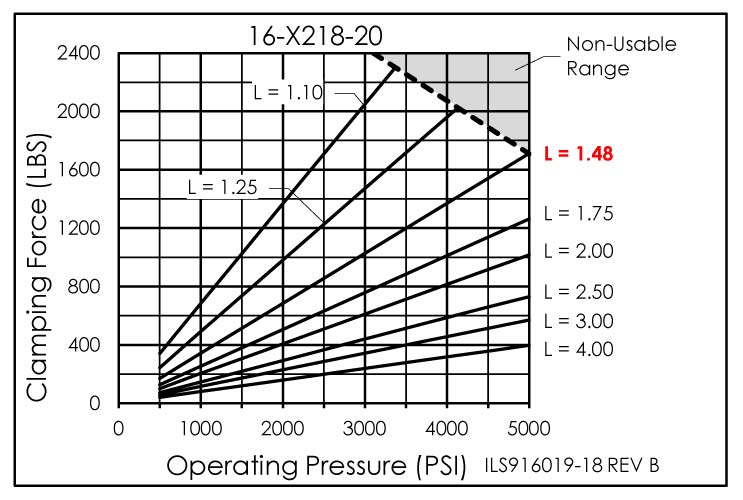
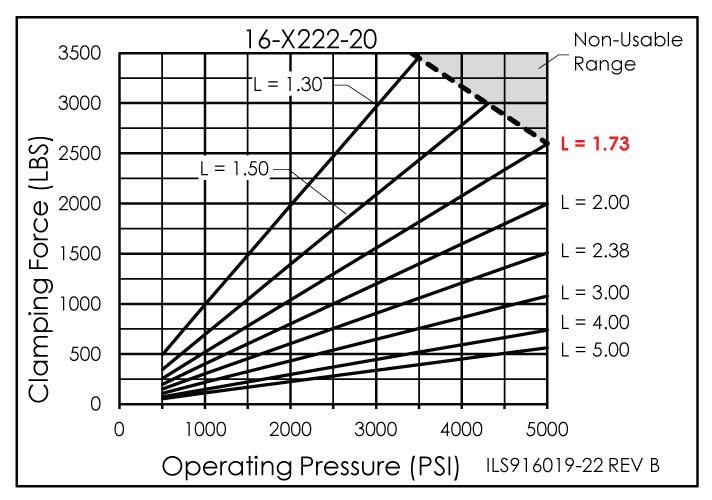
- The tables and graphs show the relationship between arm length, operating pressure and clamping force.
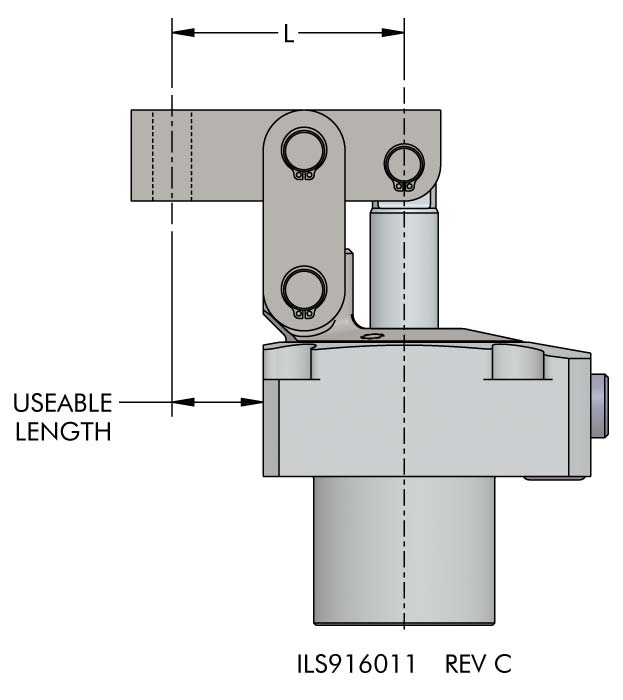
- The arm lengths shown in parentheses are the usable length from the edge of the clamp body to the contact bolt.
- Tables include maximum operating pressure associated with the arm length shown in the header rows of the table.
- The column on the right of the table is the maximum arm length allowed at the associated operating pressure.
- Operating the clamp in the non-usable range will damage the clamp and void product.
NOTE: Dimension L in Red indicated standard lever lengths. Gray area is non-Usable Range
16-3X12-00
16-XX15-00
16-XX18-00
16-XX22-00
16-3X28-00
16-3X32-00
Twin Link Lever Force Tables and Graphs
NOTE: Dimension L in Red indicated standard lever lengths. Using the clamp in the Non-Usable range will damage clamp and void product warranty. Gray area is non-Usable Range
16-X215-20
16-X218-20
16-X222-20
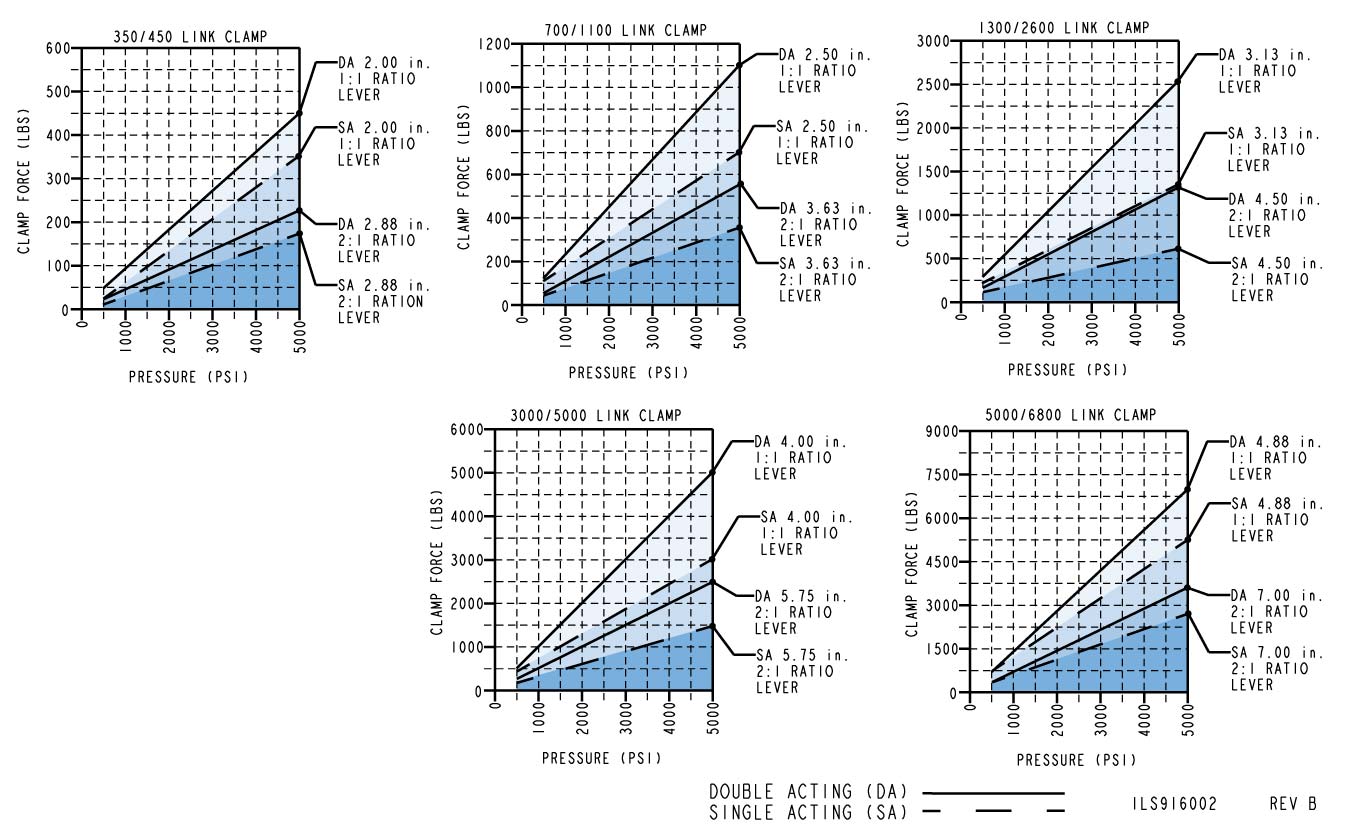
High Pressure Lever Output Curve
NOTE: Modifications to levers that result in clamp ratios below a 1:1 ratio are not in the safe operating zone for the corresponding link clamp and could result in premature failure. Exceeding the allowable offset values and operating pressures specified in the tables will result in excessive forces on the link clamp pins, links and rod which could result in premature failure.
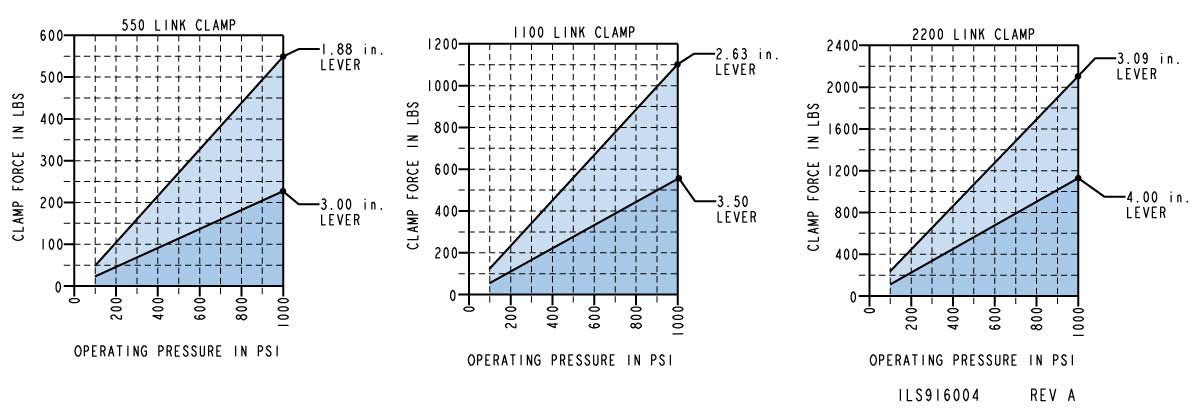
Low Pressure Lever Output Curves (D/A Only)
NOTE: Modifications to levers that result in clamp ratios below a 1:1 ratio are not in the safe operating zone for the corresponding link clamp and could result in premature failure. Exceeding the allowable offset values and operating pressures specified in the tables will result in excessive forces on the link clamp pins, links and rod which could result in premature failure.
FAQs
Browse our most Frequently asked questions and if you have an issue that isn’t covered here, reach out to our product support team below.
Tufflink 360°
The link clamp arm pivots up and out of the way to accommodate hard-to-reach or hard-to-hit clamping points. Link clamps contain the beam mechanism often preferred by fixture builders. This self-contained beam eliminates the need to build or design a clamp mechanism as part of the fixture. Vektek’s unique body and pivot design provides the least side-to-side axial deflection and the most rigid product on the market today.
The new Tufflink™ 360° is outfitted with a rotary lug to provide full rotational positioning of the lever. Compare the flexibility of Tufflink™ 360° to others on the market that provide limited positioning.
What benefit does the rotary lug offer?
The rotary lug on Tufflink™ 360° simplifies manifold mount drill passage planning and design. The body can be rotated independent of clamping lever for optimal manifold mount port location. Giving the designer greater flexibility and cutting costs in complex fixture designs. The rotary lug also simplifies plumbing location and pipe routing because the body can be rotated independent of clamping lever for optimal positioning. The rotary lug allows the clamping lever to be positioned anywhere, 360° around the mounting flange. When workpiece holding must be offset from the device centerline, simply rotate the rotary lug and lever; don’t use an offset lever requiring pressure reduction. The rotary lug feature saves time and money after the fixture is built by allowing greater flexibility for last minute adjustments in workpiece design or casting variations.
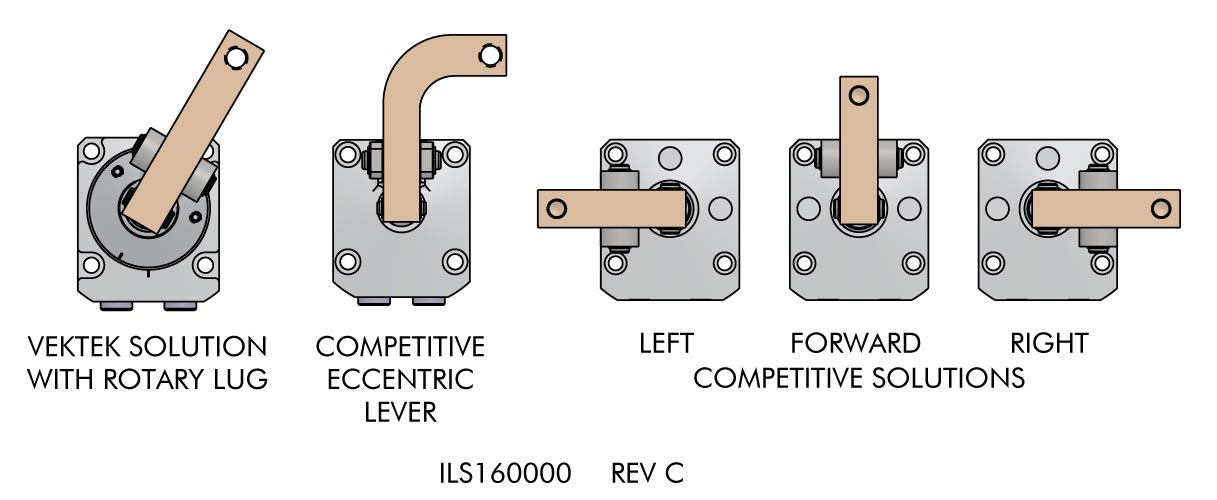
How is the rotary lug better than the eccentric levers offered by the competition?
Never derate a Link Clamp again due to an offset lever design. The clamp lever can now be rotated to adjust for part changes or last minute variations. Because it maintains symmetric loading on levers, pivots and pins, clamp life is vastly improved and failures eliminated.
How do I adjust the position of the rotary lug?
Rotary adjustment is easy, just loosen the two setscrews near the pivot on the rotary lug. Use a wrench on the end of the lever to rotate lever to desired orientation and tighten setscrews. We recommend tightening the setscrews while clamping over a workpiece at operating pressure.

What is the vertical stroke of a link clamp?
The maximum part variation is included in the vertical stroke, when outside the specification, the force generated by the clamp will be reduced and may result in reduced clamp life.
When using a high flow pump, which is better, a swing clamp or a link clamp?
Avoid the high flow pump. The link clamp positions with less mechanical resistance, but mass, acceleration and sudden stops affect all clamps adversely. Make your decision based on your acceptance of the shortened life cycle.
Is the link clamp more accurate than swing clamps?
In some cases it may be preferred, its link mechanism still has a limited amount of play and may not be as precise as you desire. This type of decision is application dependent.
The part thickness varies on my application. Which component will work best for my situation, the swing clamp or the link clamp?
Swing clamps have more part variation tolerance; with nominal installation height being at ±1/2 of straight stroke, it can tolerate ±1/2 stroke variations. The limit on link clamps is spelled out on the individual catalog page.
When should a link clamp not be used?
If you are clamping on a draft angle, the angle will exert undue stresses on the linkage mechanism. This applies to both single and twin lever link clamps. Please avoid stressing guidance mechanisms of either swing clamps or link clamps as these stresses will cause premature failure not covered by warranty due to misuse or abuse.
Link Clamps
When should I use a link clamp?
A link clamp is often preferred when you must reach over, not swing over or around a height obstacle. Reaching down into a die casting, between two mounting lugs, or a direct overhead vertical load are good examples where these devices are required. Keep in mind that the vertical clearance must be greater when you are bringing a part into position, but direct drop in loading is easily accomplished by an operator or robot.
What is the vertical stroke of a link clamp?
The maximum part variation is included in the vertical stroke, when outside the specification, the force generated by the clamp will be reduced and may result in reduced clamp life.
When using a high flow pump, which is better, a swing clamp or a link clamp?
Avoid the high flow pump. The link clamp positions with less mechanical resistance, but mass, acceleration, and sudden stops affect all clamps adversely. Make your decision based on your acceptance of the shortened life cycle.
Is the link clamp more accurate than swing clamps?
In some cases it may be preferred, its link mechanism still has a limited amount of play and may not be as precise as you desire. This type of decision is application dependent.
The part thickness varies on my application. Which component will work best for my situation, the swing clamp or the link clamp?
Swing clamps have more part variation tolerance, with nominal installation height being at 1/2 of straight stroke, it can tolerate ±1/2 stroke variations. The limit on link clamps is spelled out on the catalog page.
When should a link clamp not be used?
If you are clamping on a draft angle, the angle will exert undue stresses on the linkage mechanism. Please avoid stressing guidance mechanisms of either swing clamps or link clamps as these stresses will cause premature failure not covered by warranty due to misapplication.