
TuffGrip precision work supports from Vektek act as floating secondary locators. As your single source for complete fixture clamping devices, we offer fixture designers hydraulic, air advance and spring-loaded work supports. Our solutions are backed by U.S.-based engineering support, integration with the Vektek workholding ecosystem and fast response. To hold work supports in position, pair them with our metric palletized fixture accessories.

High Capacity, Fluid Advance Work Supports, 4-Bolt Base
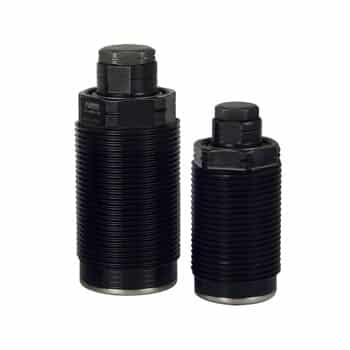
High Capacity, Fluid Advance Work Supports, Cartridge

TuffGrip™ High Capacity, Fluid Advance Work Supports, 3-Bolt Base
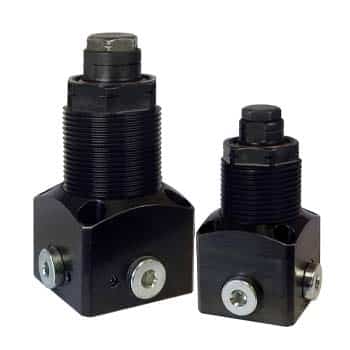
Part Present Sensing, High Capacity, Fluid Advance, Base
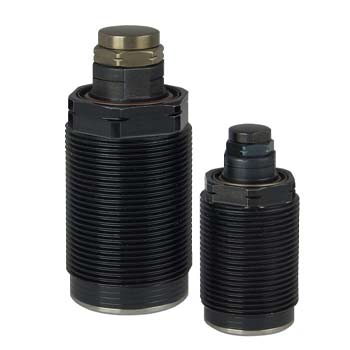
Part Present Sensing, High Capacity, Fluid Advance, Cartridge

Spring Advance, Base

Spring Advance, Cartridge
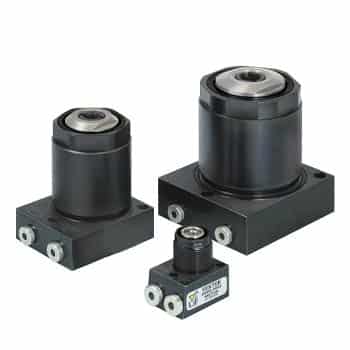
Air Advance, Base
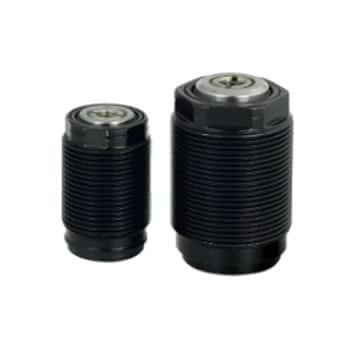
Air Advance, Cartridge
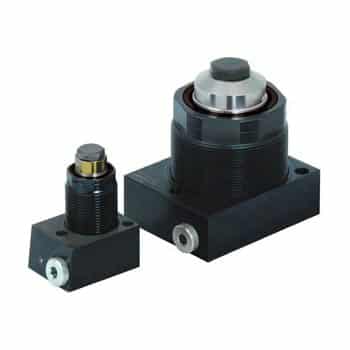
Fluid Advance, Base

Fluid Advance, Cartridge

Work Support Accessories

Metric Work Supports – Learn More
TuffGrip™ Features and Deflection Control Benefits
Self-leveling work supports use adaptive advance mechanisms, like spring, air or fluid advance mechanisms, to exert a light spring force at initial contact before the hydraulic circuit locks. The plunger conforms to the part surface before freezing and helps protect fragile components throughout the advance phase. Once in position, TuffGrip achieves a high-capacity locking force in a compact footprint. This force rating helps adjustable-height work supports remain rigid through heavy milling operations and interrupted cuts.
Uses for Work Supports
When machining complex geometries, maintaining the 3-2-1 location plane is critical. Metric work supports serve as secondary contact points to stabilize parts in demanding manufacturing sectors, such as:
- Aerospace turbine components: Grinding and milling thin-webbed super-alloys generate heavy normal forces. Unsupported webs chatter, which raises scrap rates on high-value materials. Locking work supports transmit cutting forces through the fixture, and the part stays intact.
- Medical device machining: Long, slender orthopedic implants flex under tool pressure when the shaft runs unsupported. Air-advance work supports apply a minimal contact force before locking, which allows the part geometry to hold through the full cut.
- Automotive powertrain castings: As-cast transmission housings arrive with uneven surfaces. Rest pads and work supports conform to irregular casting surfaces automatically, so the result stays consistent across operator skill levels.
FAQs
Work support selection affects dimensional accuracy, cycle time and scrap rate. These answers cover some common engineering questions before model selection.
What’s the difference between a work support and a clamp?
A clamp holds the workpiece against fixed locators, while a work support rises to meet the part, locks at that position and resists machining-induced deflection from below.
Spring-loaded vs. hydraulic: Which do I need?
Choose spring advance for parts heavy enough to depress the plunger during loading, and select a hydraulic work support on palletized fixtures to maintain a single power medium. Use air advance for light, fragile parts where spring force risks distortion.
Are TuffGrip supports compatible with Kosmek fixtures?
Vektek offers base, manifold and cartridge-mount configurations as direct replacements or upgrades for Kosmek and Roemheld setups.
What are rest pads, and when do I need different types?
Rest pads are the interchangeable contact bolts that thread into the support plunger. Use dome-headed pads on cast or irregular surfaces and flat or custom-machined pads when you require broader contact to protect soft materials.
Solve Your Deflection Challenges Today
Tell us where deflection occurs in your fixture, and we will recommend the right TuffGrip model and capacity. We also provide custom solutions. Request a deflection analysis from our engineering team today.
You have questions? WE HAVE ANSWERS!
Use the contact button below to be connected with one of our team of experts.