
LEARN MORE
Low Pressure TuffCam Swing Clamps
Overview | Cutaways | Time and Flow | Clocking | Restrictors | Force Tables and Graphs | FAQs
Overview
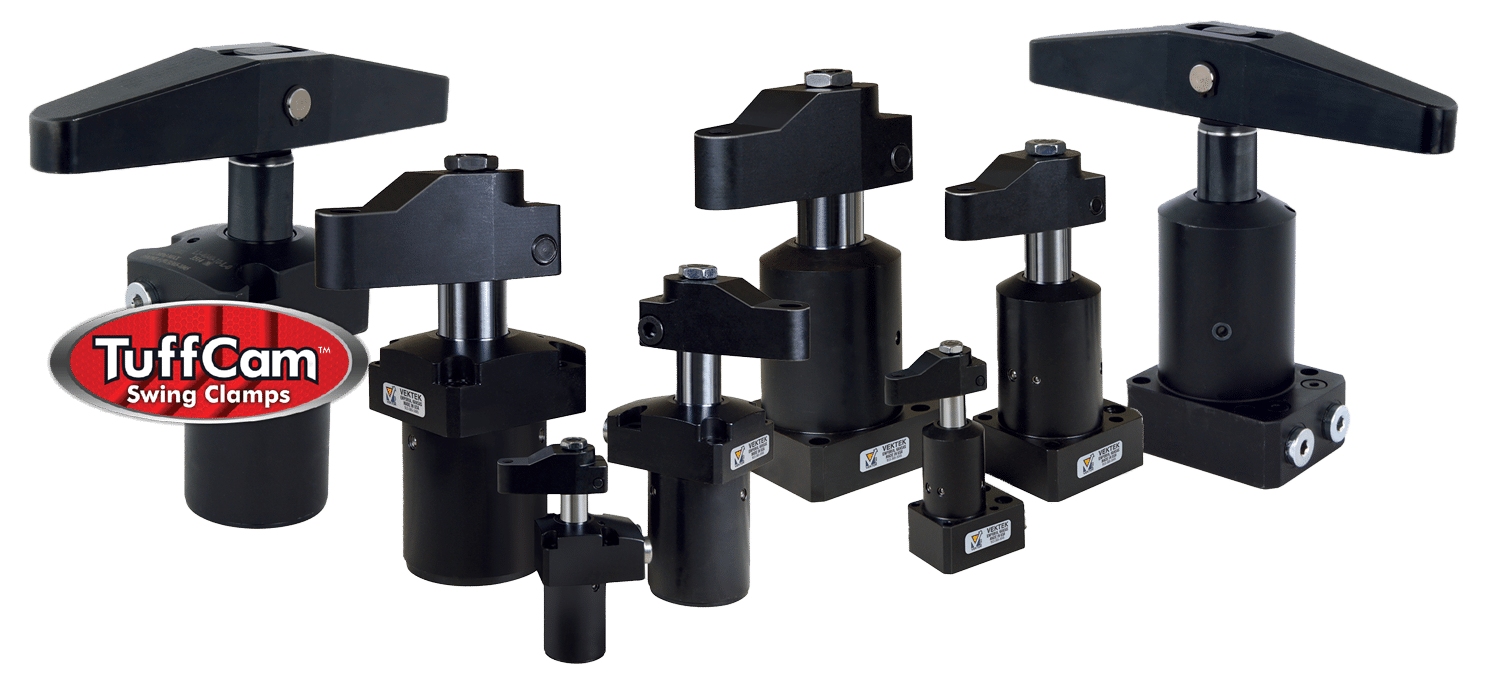
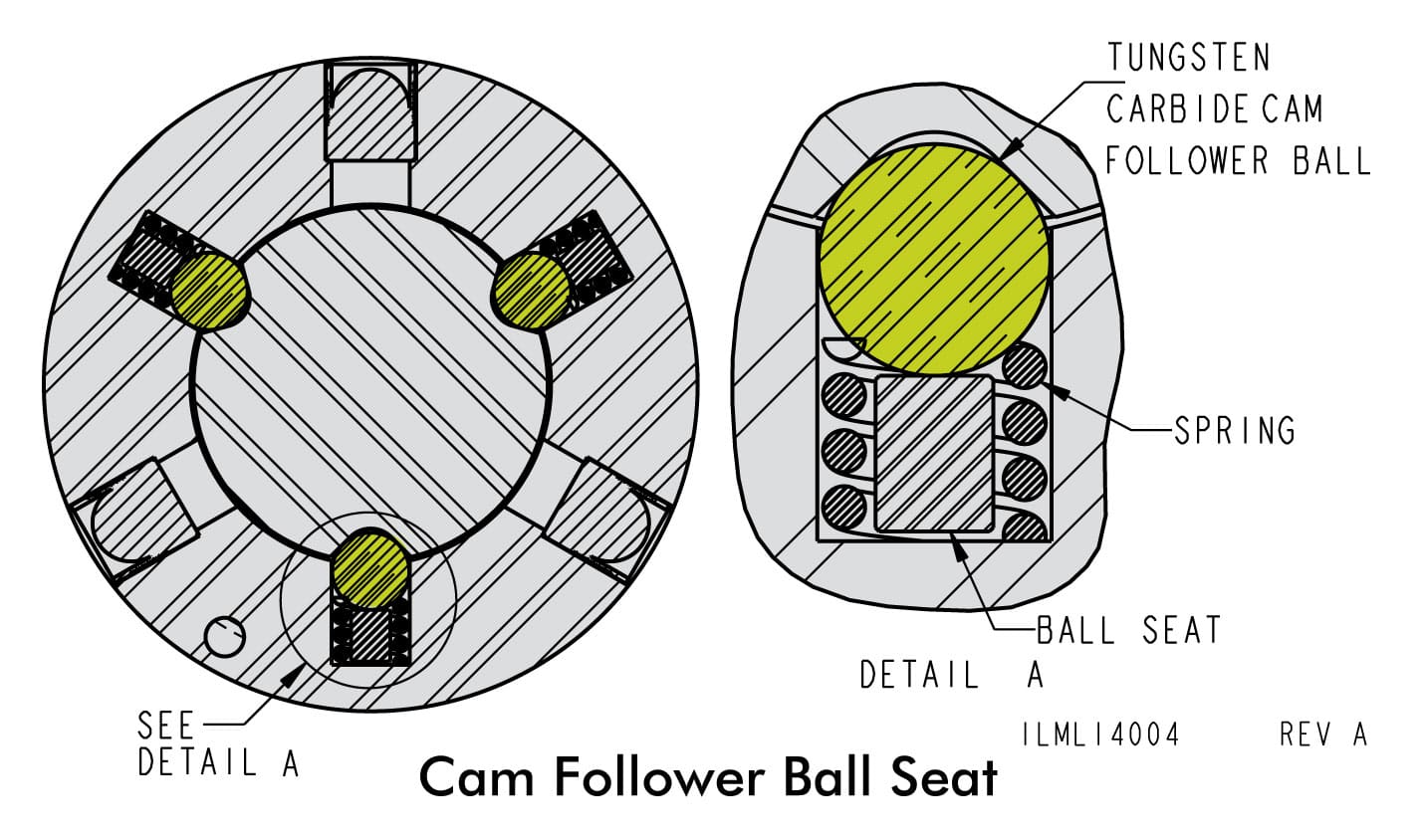
Swing Clamps developed to meet your demand for high-speed, precise positioning and/or heavy arm applications in a 7MPa operating pressure environment. One of the keys to this innovation is the patented spring loaded TuffCam™ design that was developed to improve strength and wear. Using the patented Vektek V-Groove, a stainless steel ball seat, these clamps have reduced static friction for improved clamp breakaway and reduced dynamic friction for improved life. This combination adds up to producing the most accurate and repeatable swing clamp cam assembly.
- Available in 6 sizes from 1.9kN to 20.4kN at 7 MPa (70bar), in Top Flange and Bottom Flange body styles.
- Double acting.
- Three cams for more accurate arm positioning (90° ±3°swing accuracy) (±0.25° contact position repeatability).
- 7MPa swing clamps are designed to work at any pressure between 1MPa (10bar) and 7MPa (70bar) using either the standard or extended length arms without the need for pressure reduction.
- Patented ball seat for improved rotary function, cam follower contact, and reduced dynamic and static friction.
- Tungsten Carbide balls.
- BHC™ (Black Hard Coating) on the cylinder bodies helps prevent scoring and scratching.
- Clocking features help to improve and speed-up arm changes.
- Arms ordered separately.
Cutaways
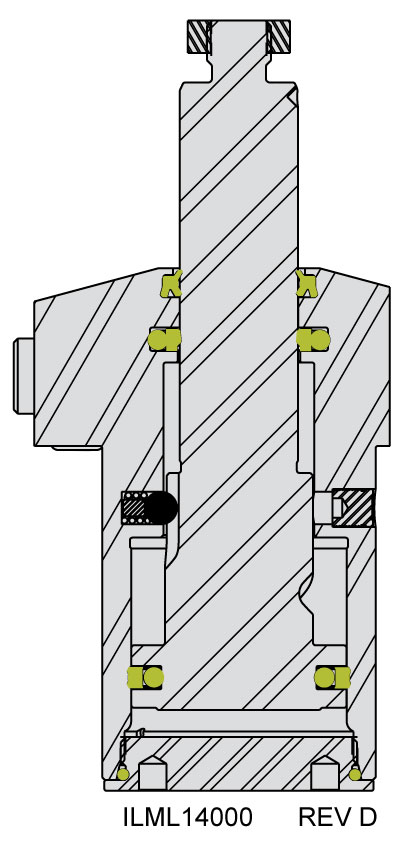
Top Flange Swing Clamp
Cutaway
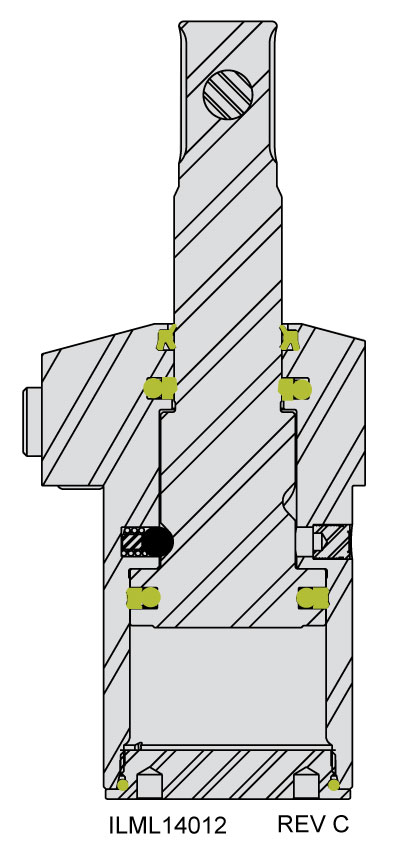
Top Flange Clevis Clamp
Cutaway
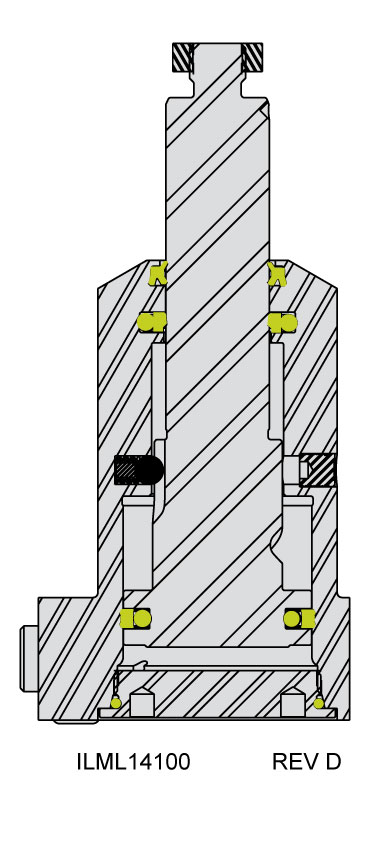
Bottom Flange Swing Clamp
Cutaway
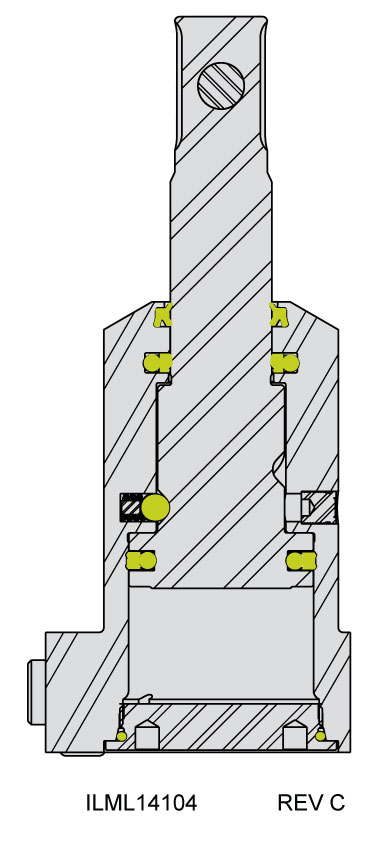
Bottom Flange Clevis Clamp
Cutaway
Time and Flow
- For upreach and double arms, use extended arm flows and times.
- The above flows are maximum recommendations and clamp times are minimum recommendations.
- The actual time to position the clamp will vary by custom arm configuration and may require customer testing in specific application to establish limits.

Clocking
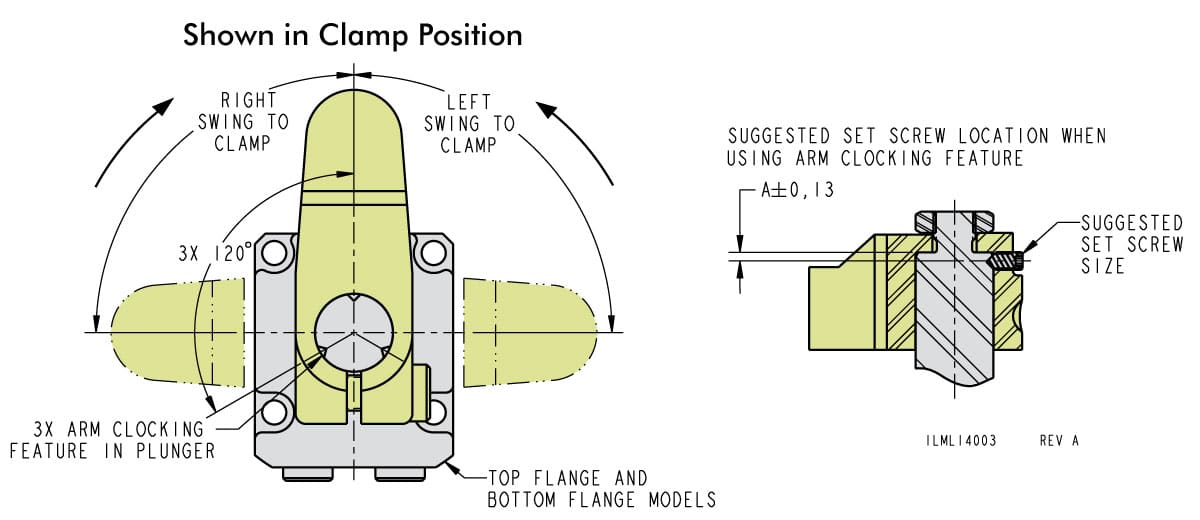
Six drill points exist on each clamp. One point standardizes arm location at a particular position. An additional 5 (five) orientation drill points reside 60º out from that position and each other. Access to the positioning feature is through the back or side of the arm, making modification a snap for users. Each arm position can have its own specification.

Restrictors
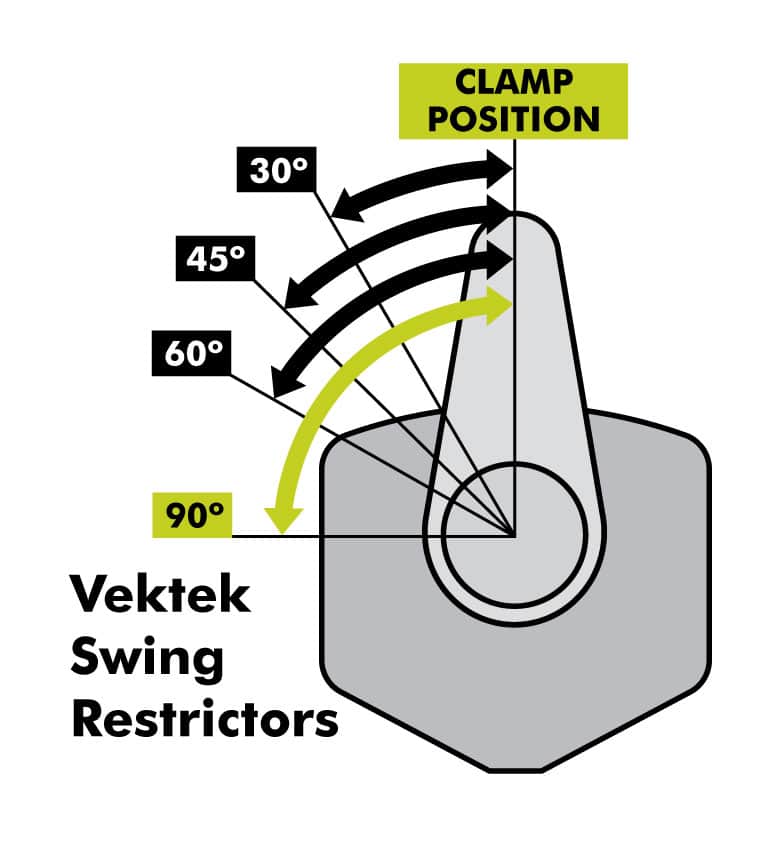
Custom angle restrictors available on request. Call 800-992-0236 to make a request.

Force Tables and Graphs
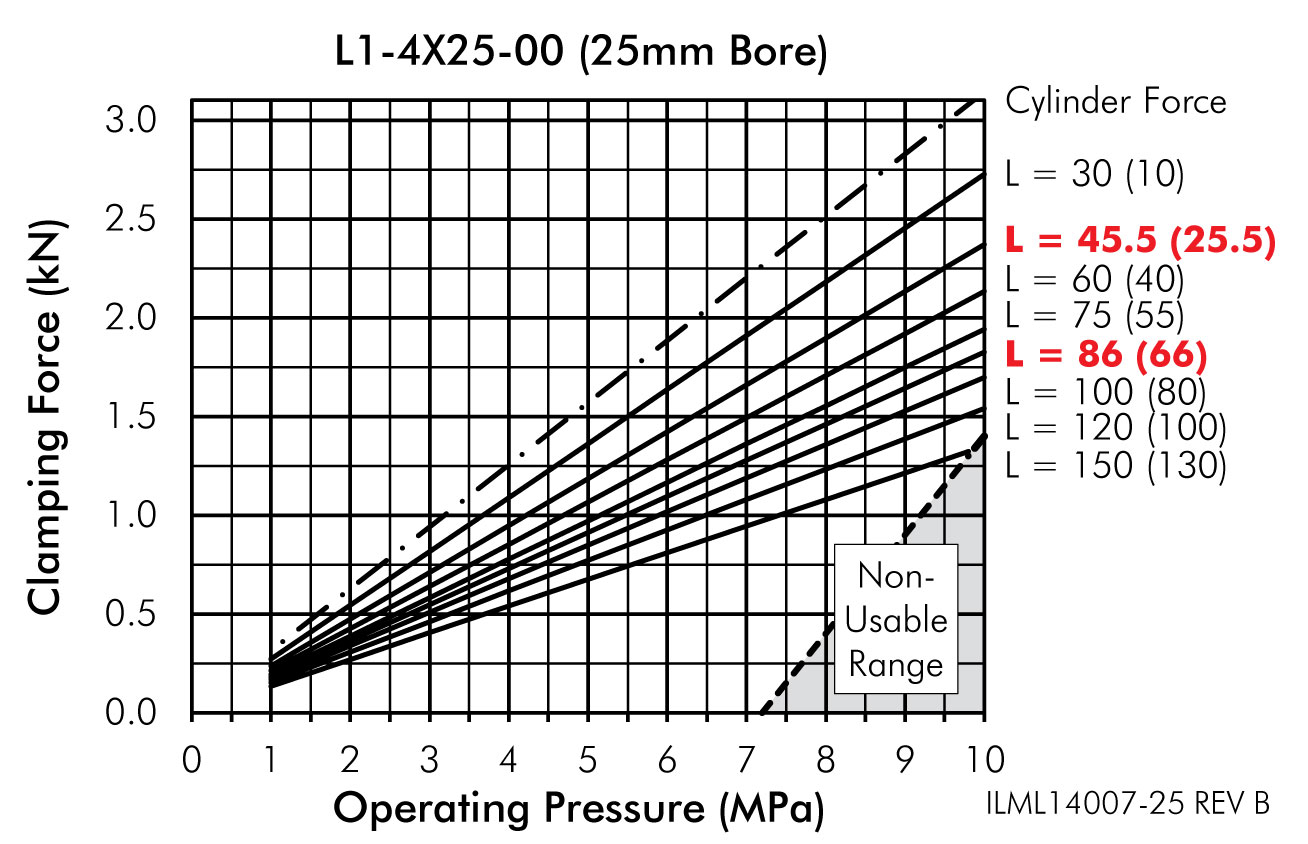
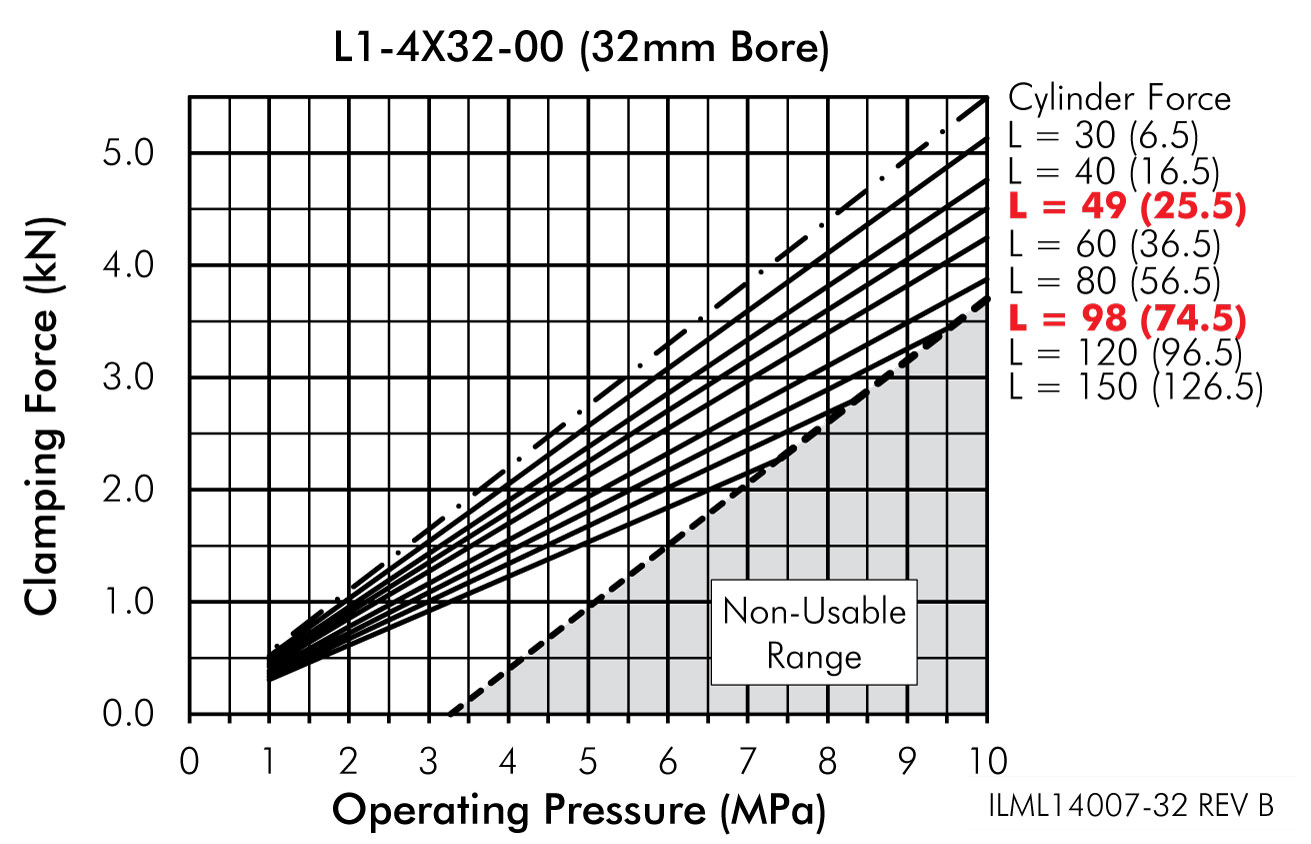
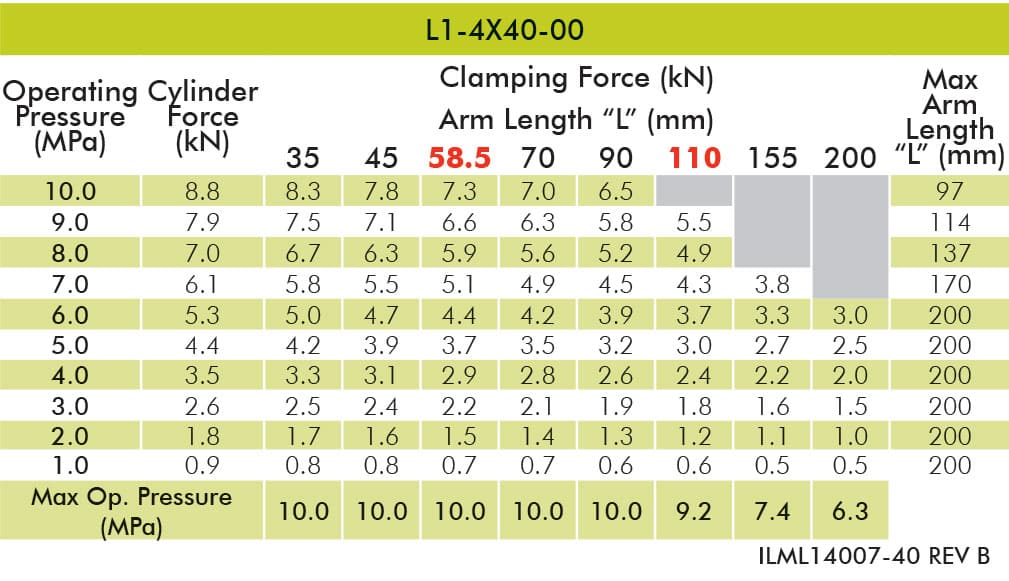
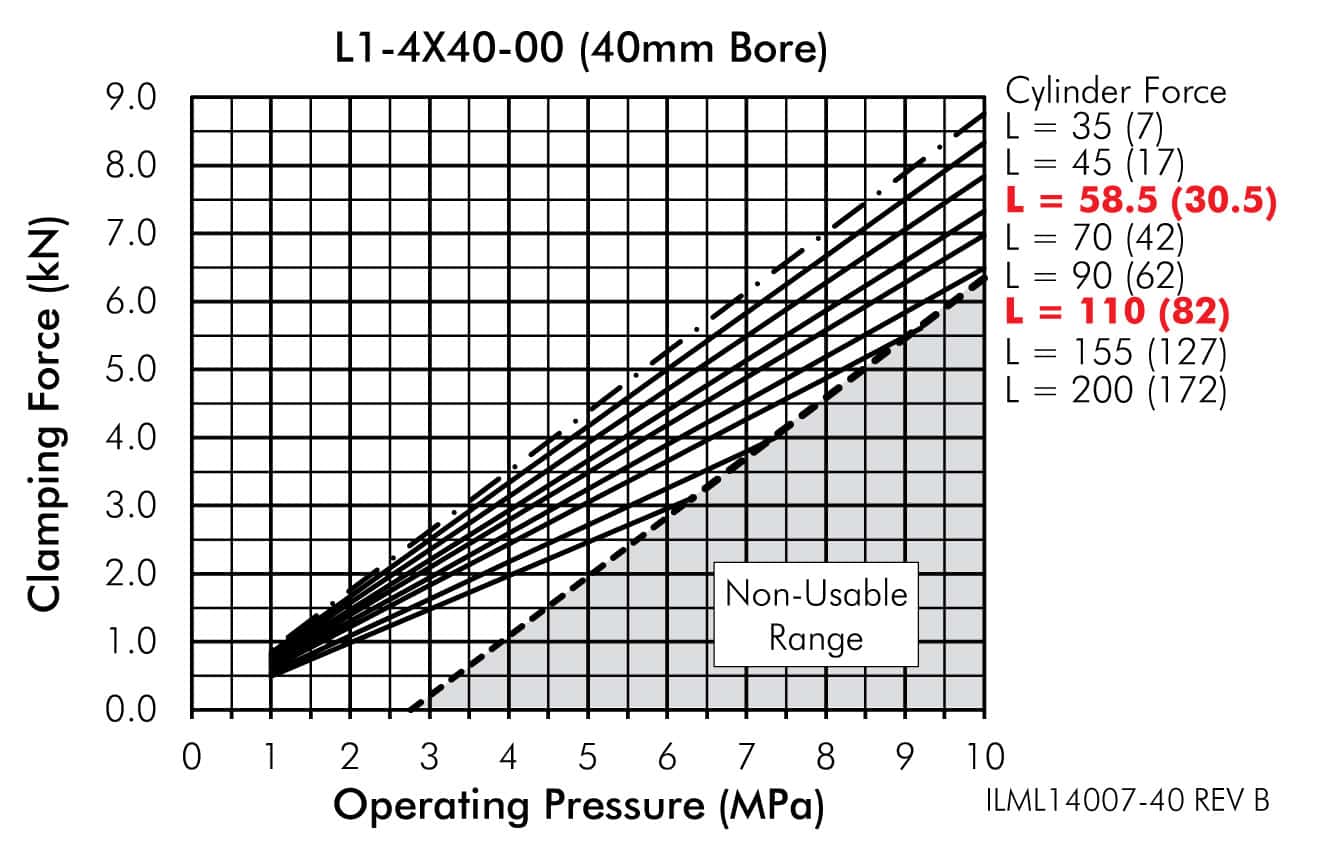
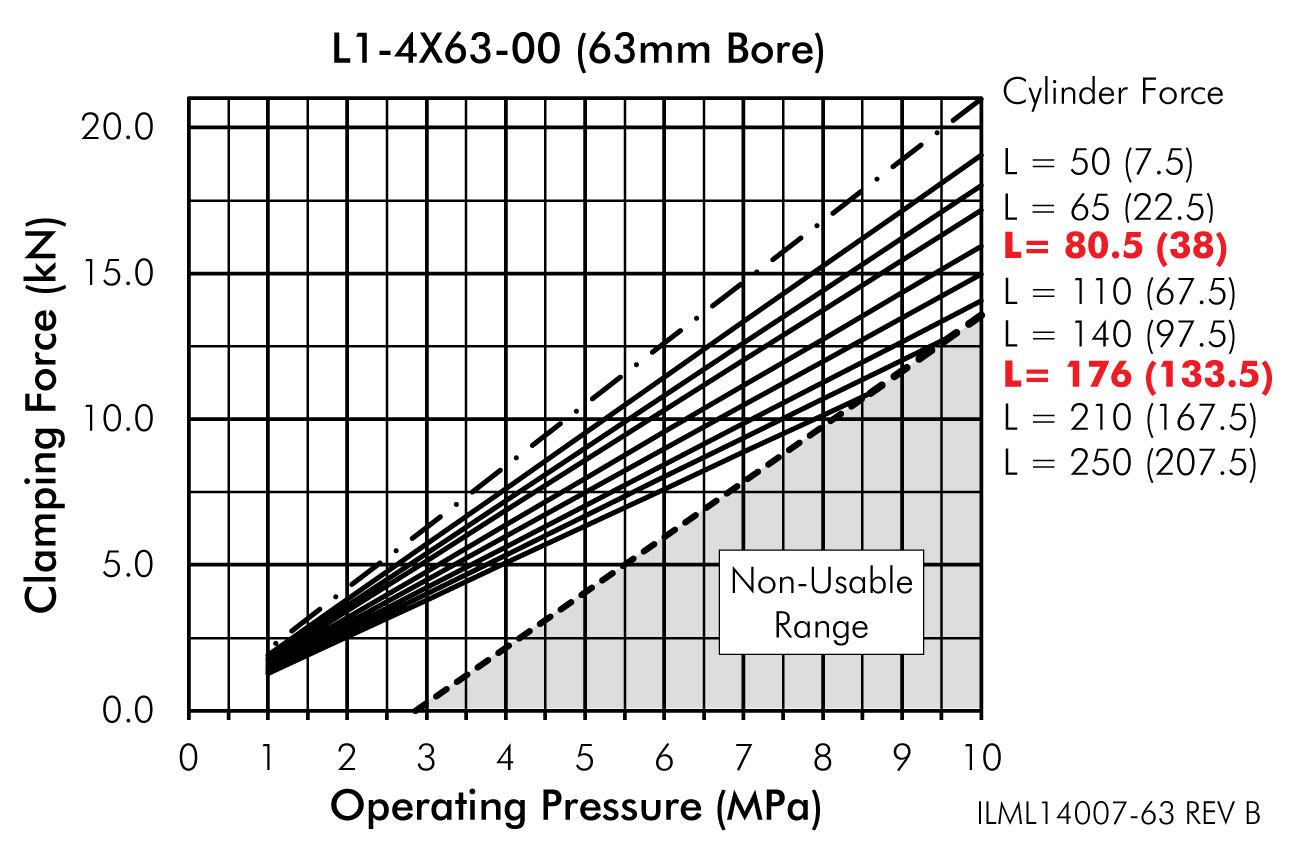
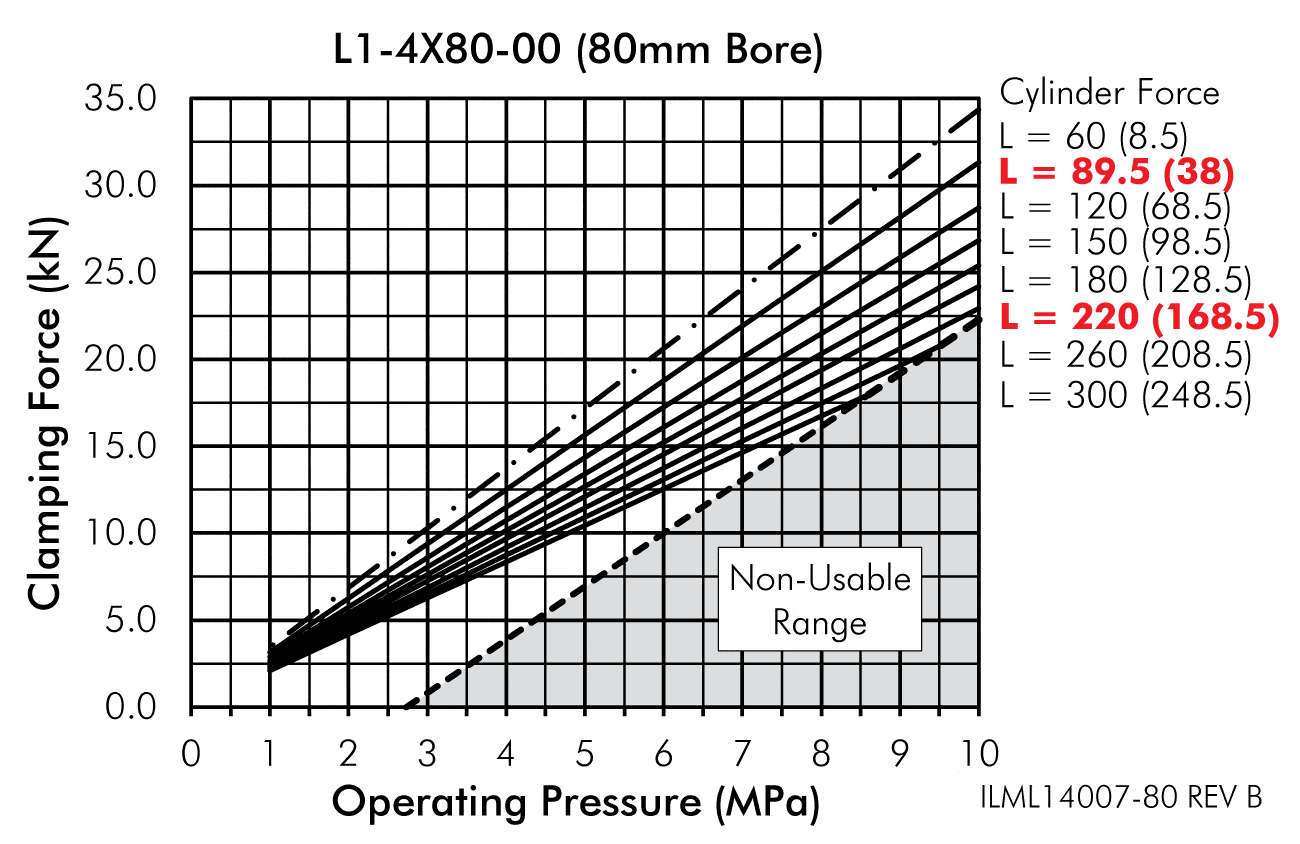
Gray area is non-Usable Range
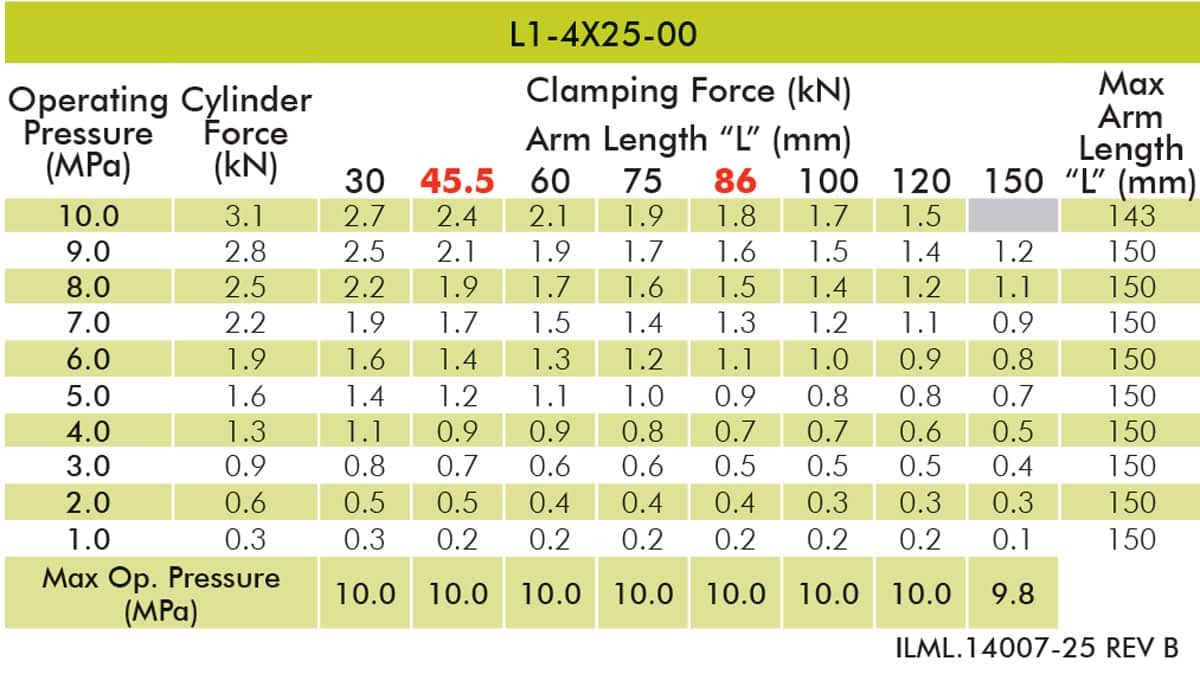
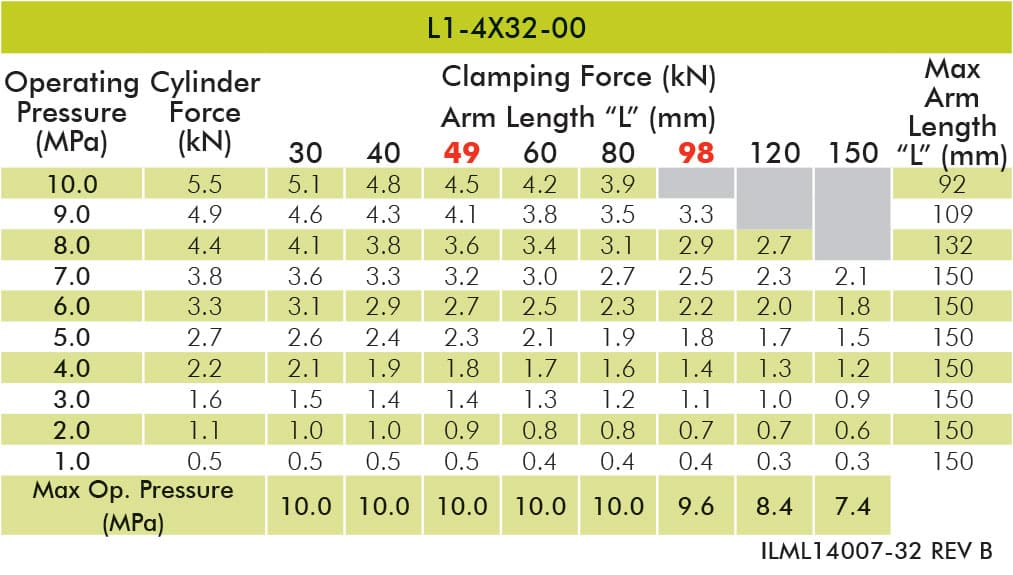
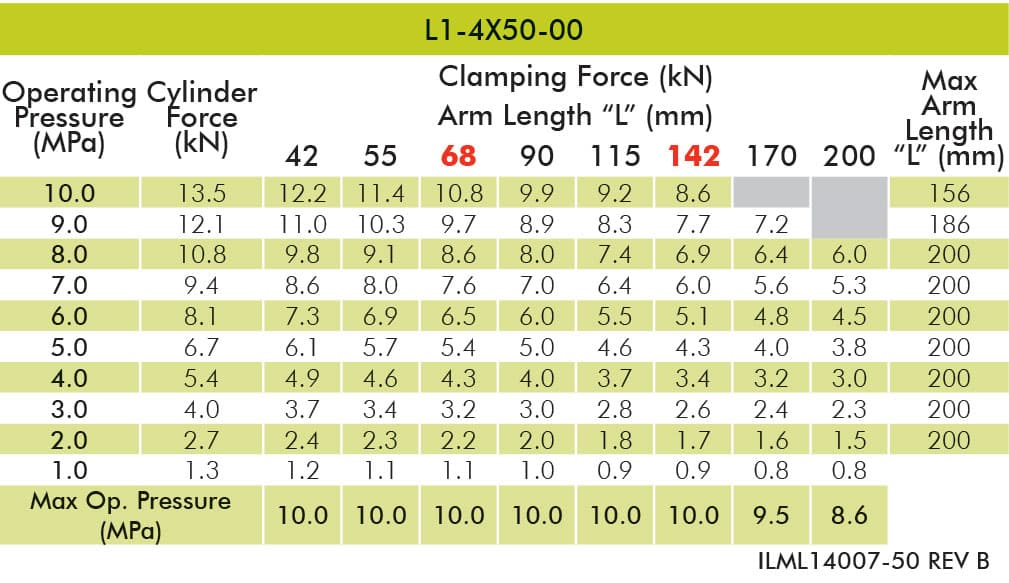
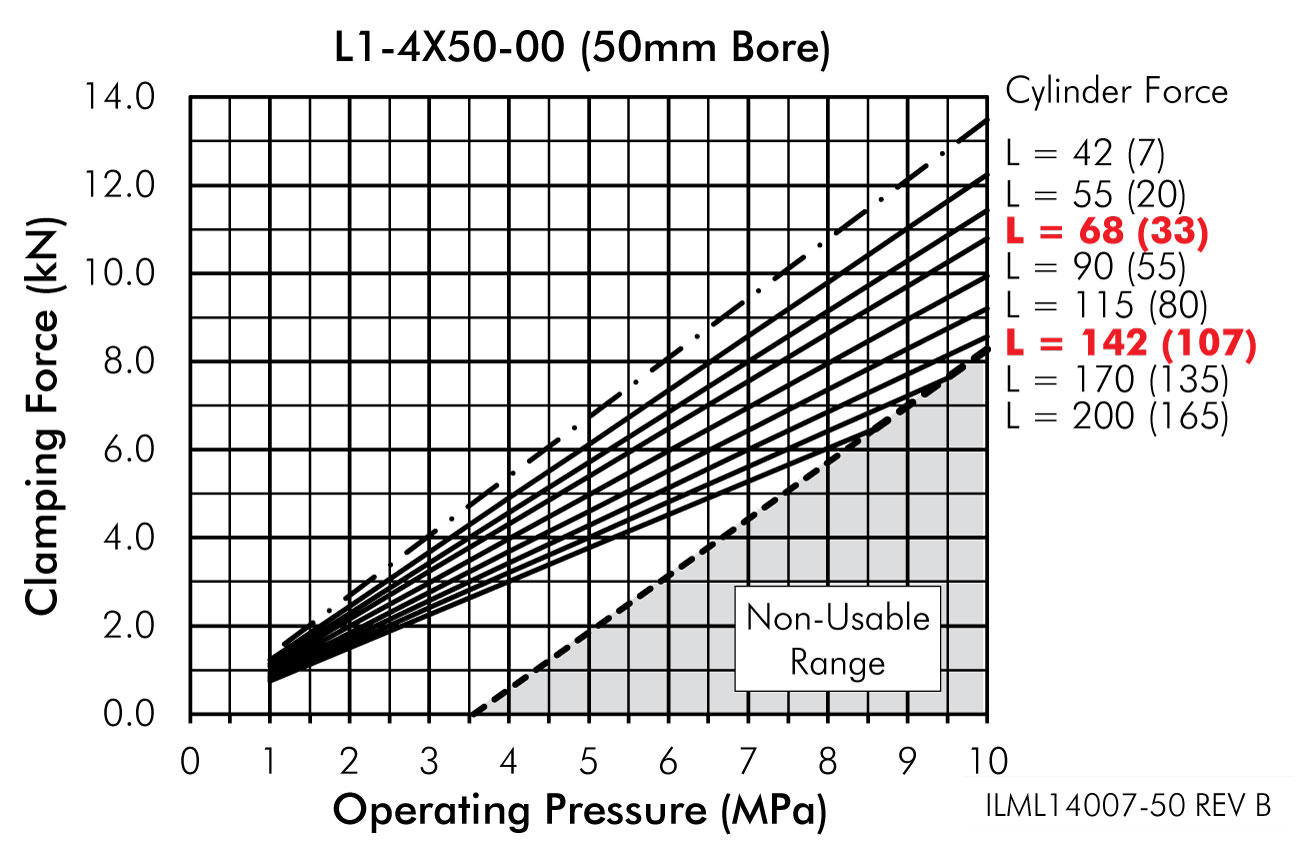
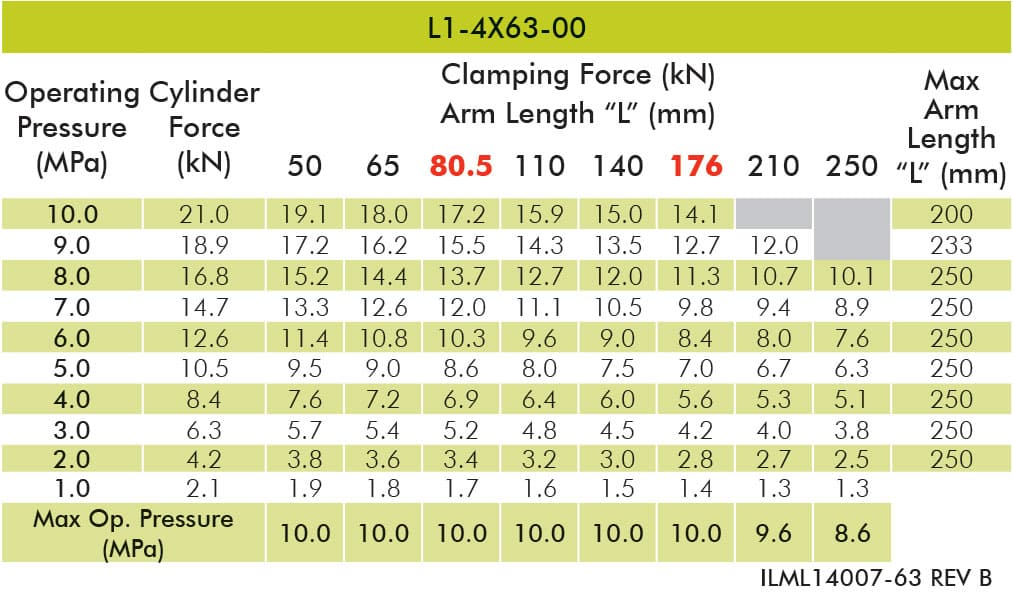
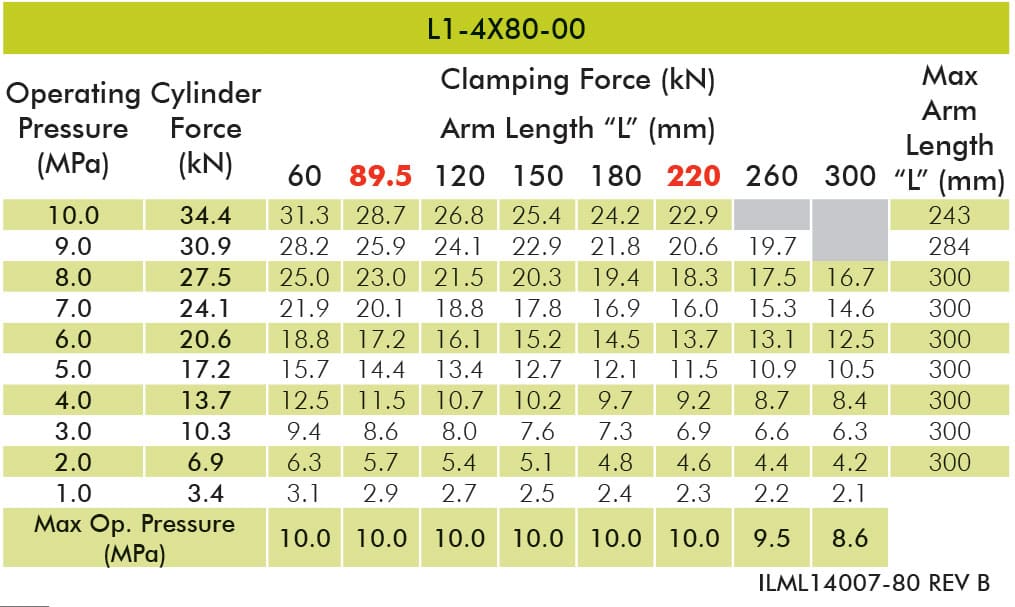
- The tables and graphs show the relationship between arm length, operating pressure and clamping force.
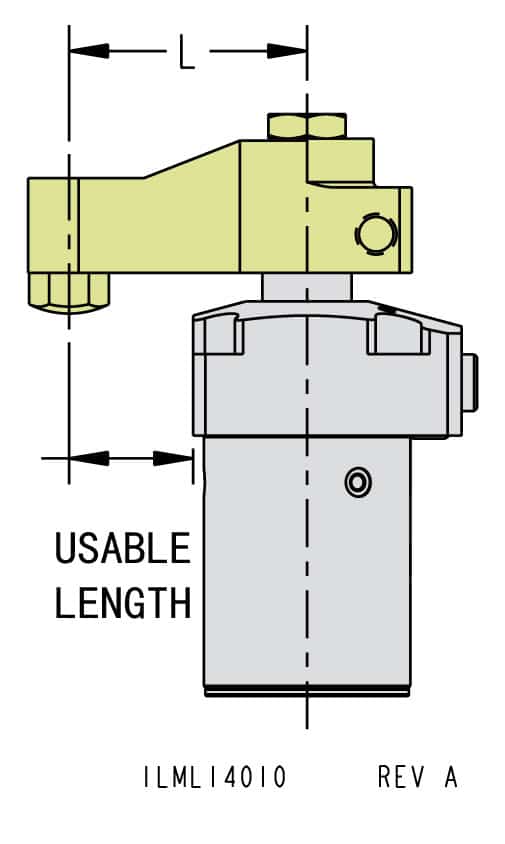
- The arm lengths shown in parentheses are the usable length from the edge of the clamp body to the contact bolt.
- Tables include maximum operating pressure associated with the arm length shown in the header rows of the table.
- The column on the right of the table is the maximum arm length allowed at the associated operating pressure.
- Operating the clamp in the non-usable range will damage the clamp and void product.
NOTE: Dimension L in Red indicated standard lever lengths.
L1-4×25-00
L1-4×32-00
L1-4×40-00
L1-4×50-00
L1-4×63-00
L1-4×80-00
FAQs
Browse our most Frequently asked questions and if you have an issue that isn’t covered here, reach out to our product support team below.
When do you recommend the use of TuffCam™ 7 MPa Swing Clamps over other Vektek product?
Sometimes there are applications where speed is essential, massive arms are required, or position sensing and feedback are necessary. These applications may result in premature failure not due to defects in standard clamps, but from excesses in speed, mass or other requirements.
What kind of return on my investment can I reasonably expect by converting my manual clamps to TuffCam™ 7 MPa Swing Clamps?
Ask your Vektek sales representative for the Power Workholding Brochure. Time studies and costs are comparable justification.
What makes the cam follower ball seat so special in these units?
The three cams and three cam balls guide the rotation of the plunger and provide greater guide, support and directional stability. The patented cam follower design is unique in the industry and uses solid tungsten carbide balls and stainless steel ball seats. The ball seat design assures that the ball rolls in the cam rather than jamming and scraping resulting in wear on both the cam track and ball. This vastly improves swing repeatability, contacting the same point ±0.25 degrees.
I want to use work supports with TuffCam™ 7 MPa Swing Clamps. Can you give me some tips that will help me get the most from my clamping devices?
Vektek 7 MPa Work Supports and Swing Clamps are made in capacity sets as well as arm-to-support centerline measurement.
It is important to hit my part in the exact place every time in my application. Will your TuffCam™ 7 MPa Swing Clamps meet this requirement?
Standardized repeatability of ±0.25 degrees is “Best-In-Class” Worldwide.
What defines a TuffCam™ 7 MPa Swing Clamp?
TuffCam™ 7 MPa is a single direction tri-cam design swing clamp. These clamps produce the strength and reliability to support faster speeds and larger arms. TuffCam™ 7 MPa delivers notably better accuracy and repeatability over other brands. The clocking feature, dramatically reduces the time it takes to change arms for maintenance, replacement or design set up.
How can I measure the clamp speed?
The maximum speed of a swing clamp is applicable to both clamp and unclamp function, as the momentum on the cam track and cam follower apply to both movements. To approximate the speed of your application:
- Look down the centerline of the swing clamp, perpendicular to the arm.
- Actuate your clamping system while watching the arm “swing” into position.
- The eye can track speed of movement at roughly 1/16 second. If while looking directly into the end of the swing clamp you can observe the arm move through it’s swing, the positioning time should be somewhere around 1/2 second or longer. (See flow rates and clamping time tables.)
- If, while looking directly into the end of the swing clamp, you cannot observe the arm move, or it is unclamped and the next thing you can see is the device in the clamped position, the positioning time is something substantially less than 1/2 second. Your standard model clamp is at risk of premature failure. However, the TuffCam Swing Clamps can actuate at a faster speed.
- It is possible to approximate the clamp time by adding the total active volume of devices in the specific control branch of your system, and dividing that volume (cubic inches) by your pump’s output volume (cubic inches per minute) and then multiplying that number by 60 (60 seconds per minute). This will give you the theoretical calculated time to move a device through its stroke, but does not account for flow loss due to flow restrictions in the system.
I want to use the jam nut only to hold my arm in place. Will this work?
It is unlikely that you can use the jam nut to hold arm orientation adequately. We have had customers modify clamps to include flats, pins, serrations or use set screws to hold orientation. These methods may work in specific instances. We still recommend our method of attachment, locknut and cross bolt for a secure, dependable, universal attachment. Other methods may complicate the replacement of clamps when they are damaged by a machine crash or other problems.
Why should I buy your arm rather than have my toolmaker make one?
Our arm is designed to hold orientation when properly installed. It has a relief to keep from over-stressing the locknut. It will probably cost you less than the total cost of making your own. You can rest assured that our arm is made to our specifications and will withstand the forces our clamps generate, when used as recommended.