
Overview
TuffLink ™ 360°
The link clamp arm arcs up and out of the way to accommodate hard-to-reach or hard-to-hit clamping points. Link clamps contain the beam mechanism often preferred by fixture builders. This self-contained beam eliminates the need to build or design a clamp mechanism as part of the fixture. Vektek’s unique body and pivot design provides the least side-to-side axial deflection and the most rigid product on the market today.
The new TuffLink™ is outfitted with a rotary lug to provide full rotational positioning of the lever. Compare the flexibility of TuffLink™ to others on the market that provide limited positions, typically in 90° increments.
- Provides reach-over clamping for hard-to-hit points in a very rigid beam design
- Double-acting models
- Ideal for vertical “drop-in” loading

Cutaways
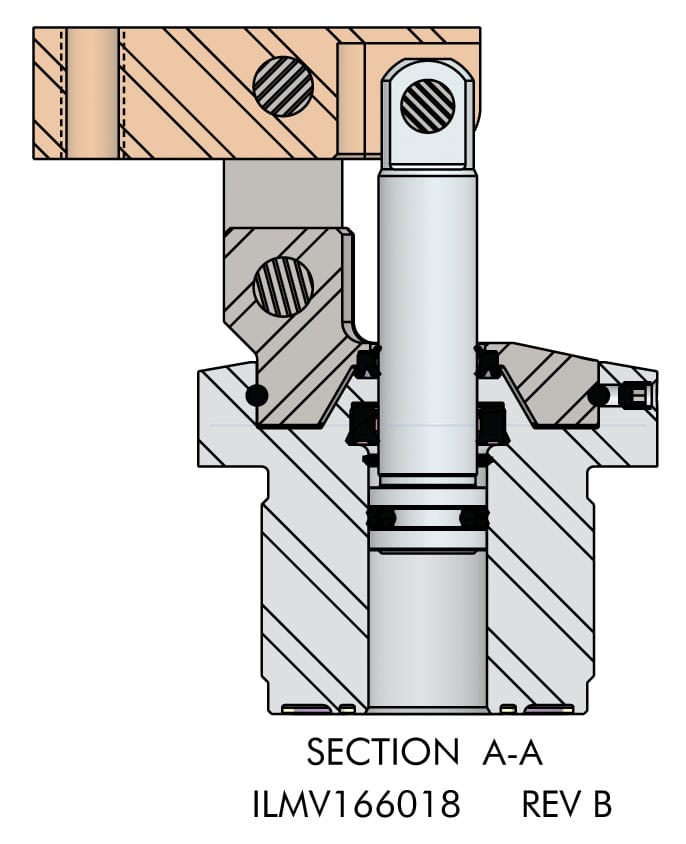
TuffLink 360 Double Acting Cartridge Mount
Cutaway

Single Acting TuffLink 360 Link Clamp
Cutaway

Double Acting TuffLink 360 Link Clamp
Cutaway
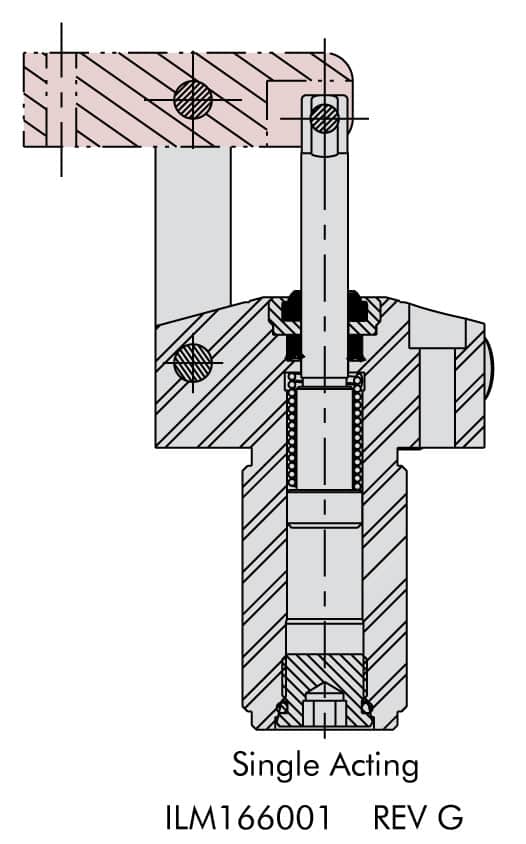
350 Bar Link Clamps Single Acting
Cutaway
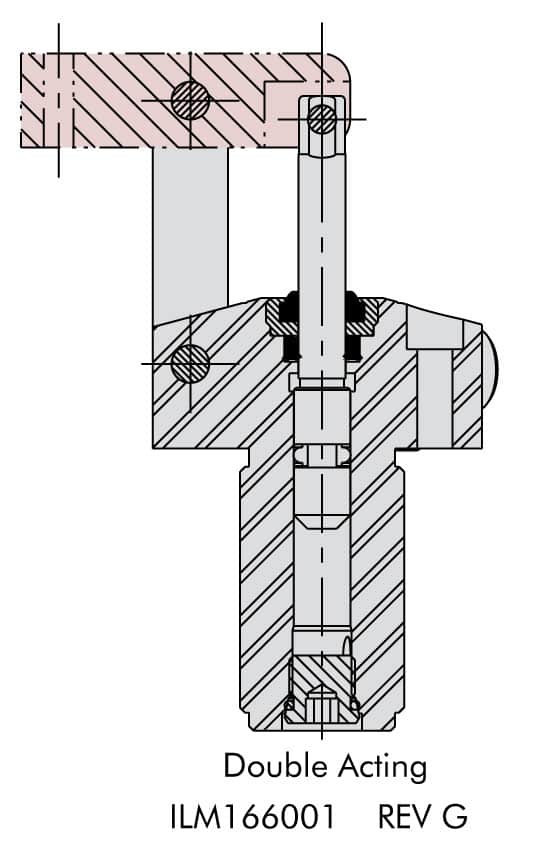
350 Bar Link Clamps Double Acting
Cutaway
Force Tables and Graphs
41-6X12-00
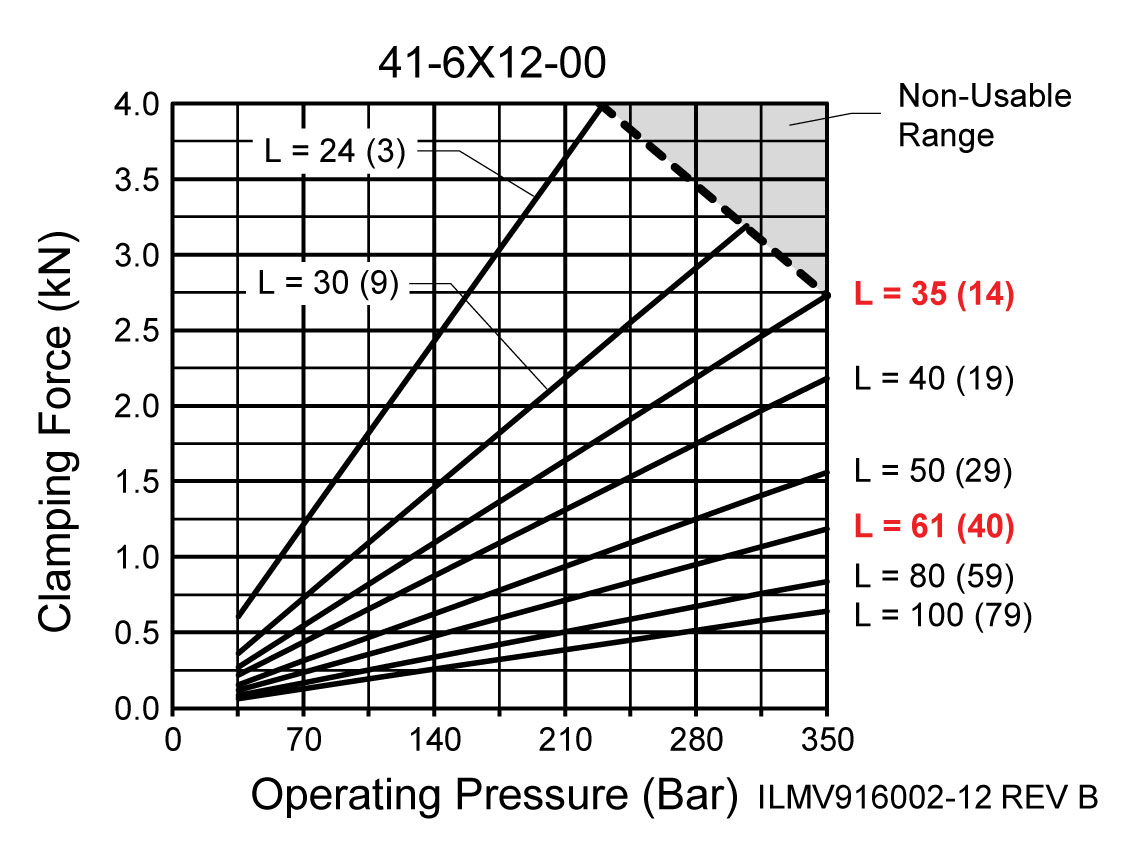
41-6X15-00
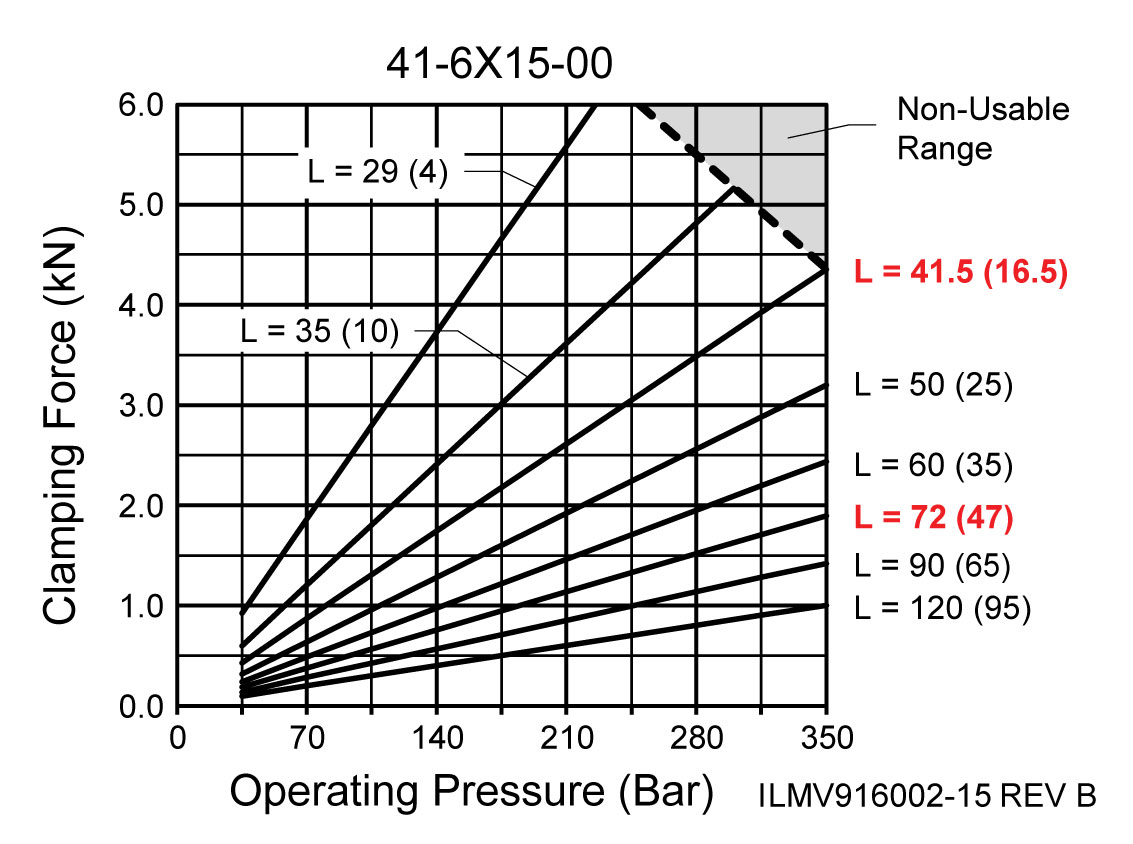
41-6X18-00
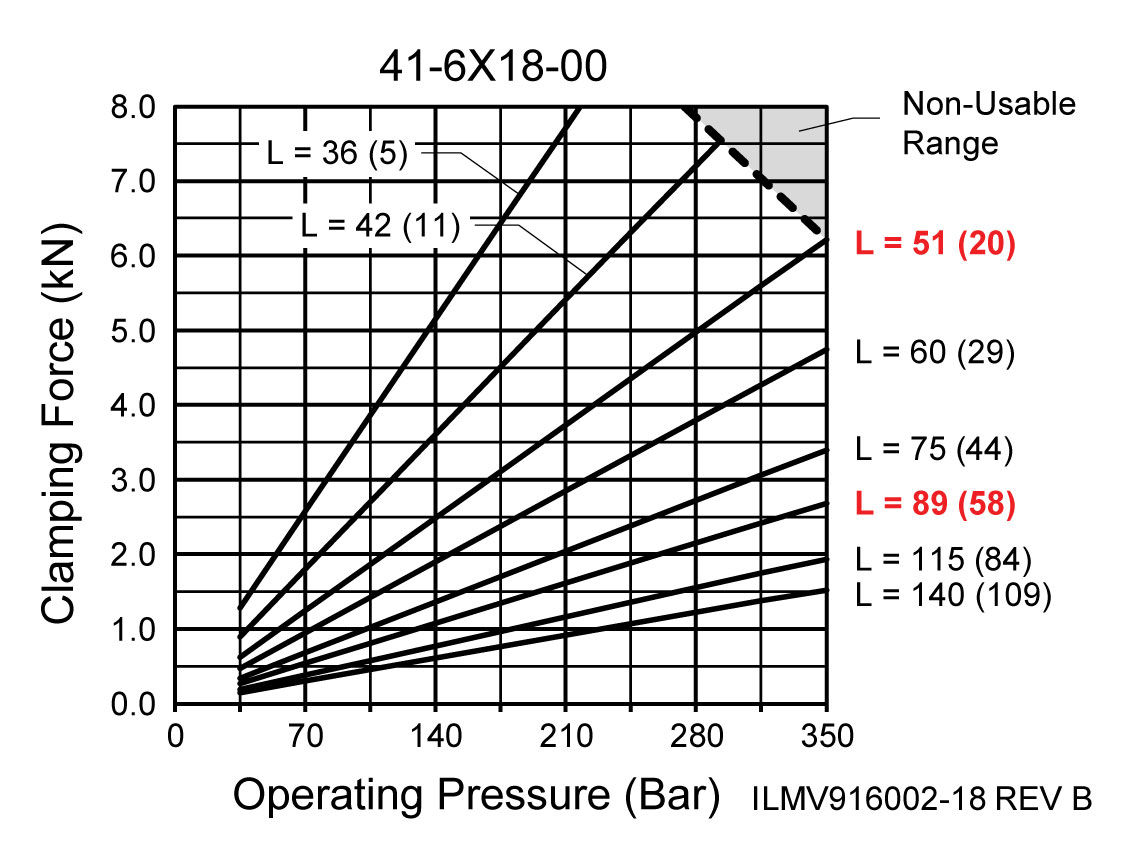
41-6X22-00
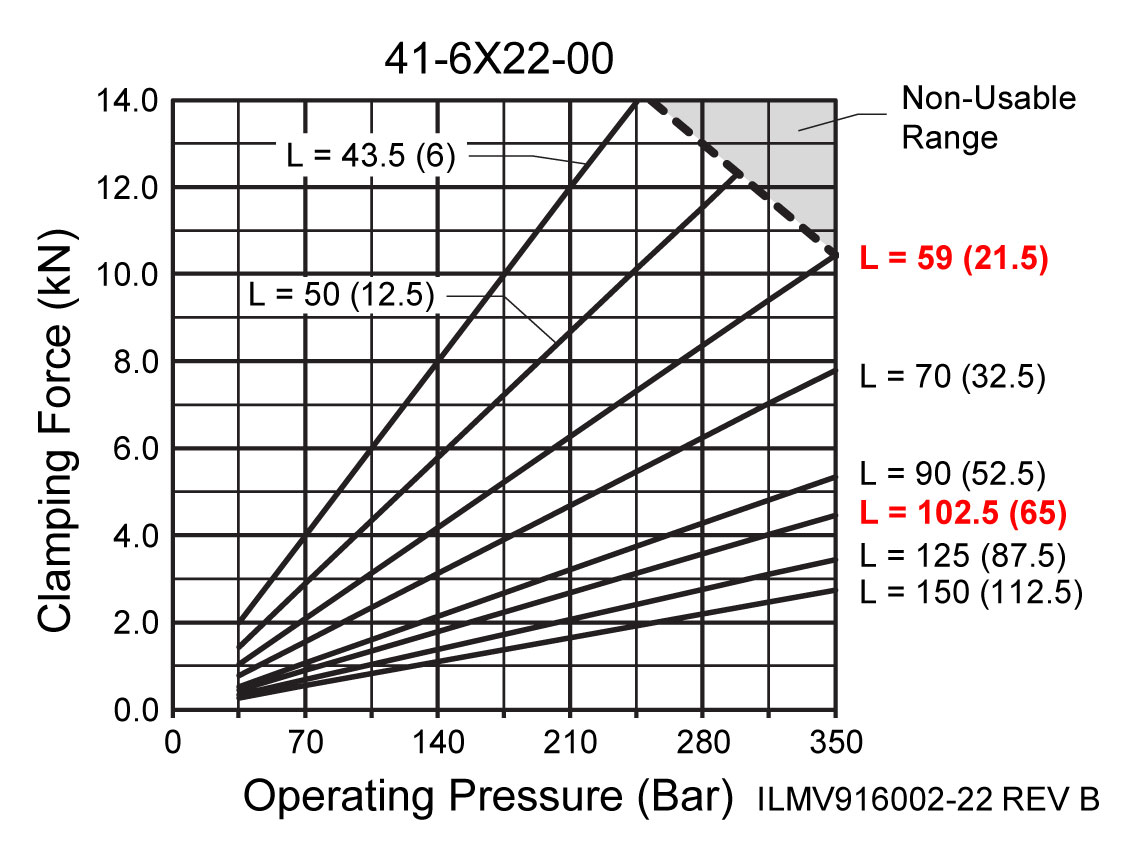
41-6X28-00
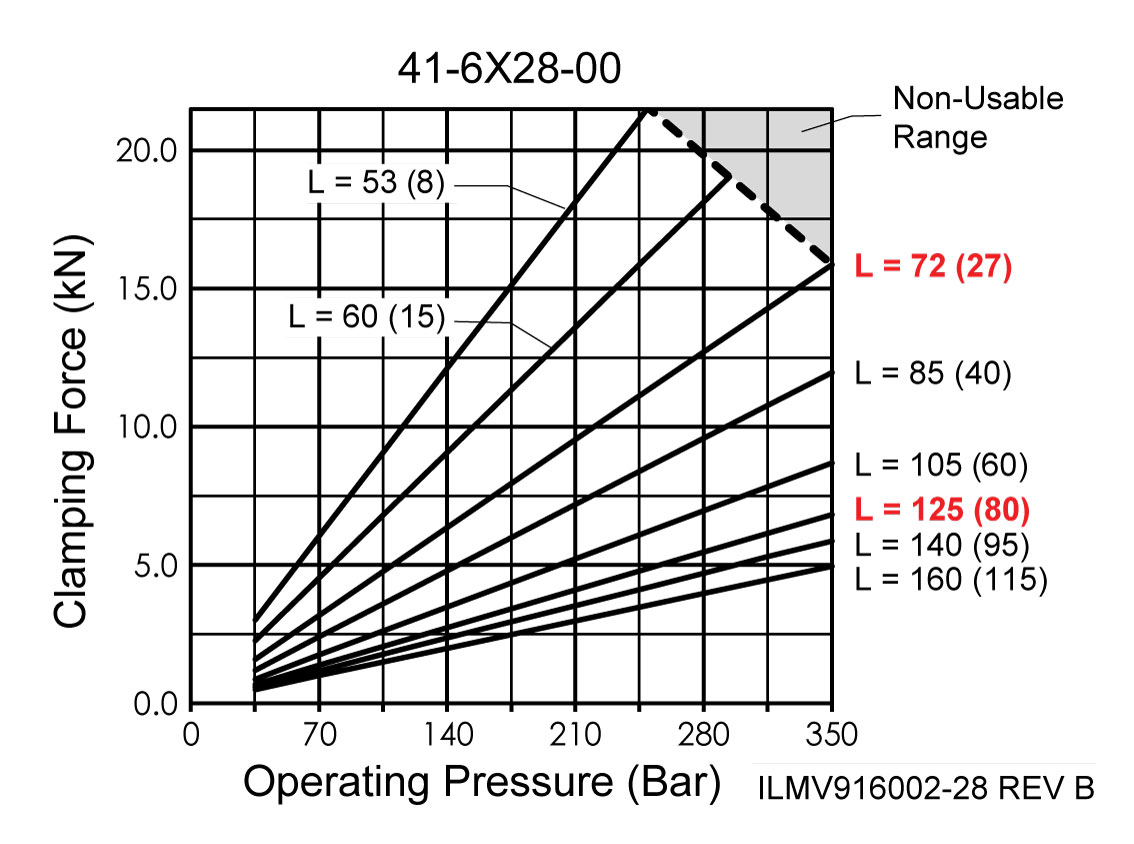
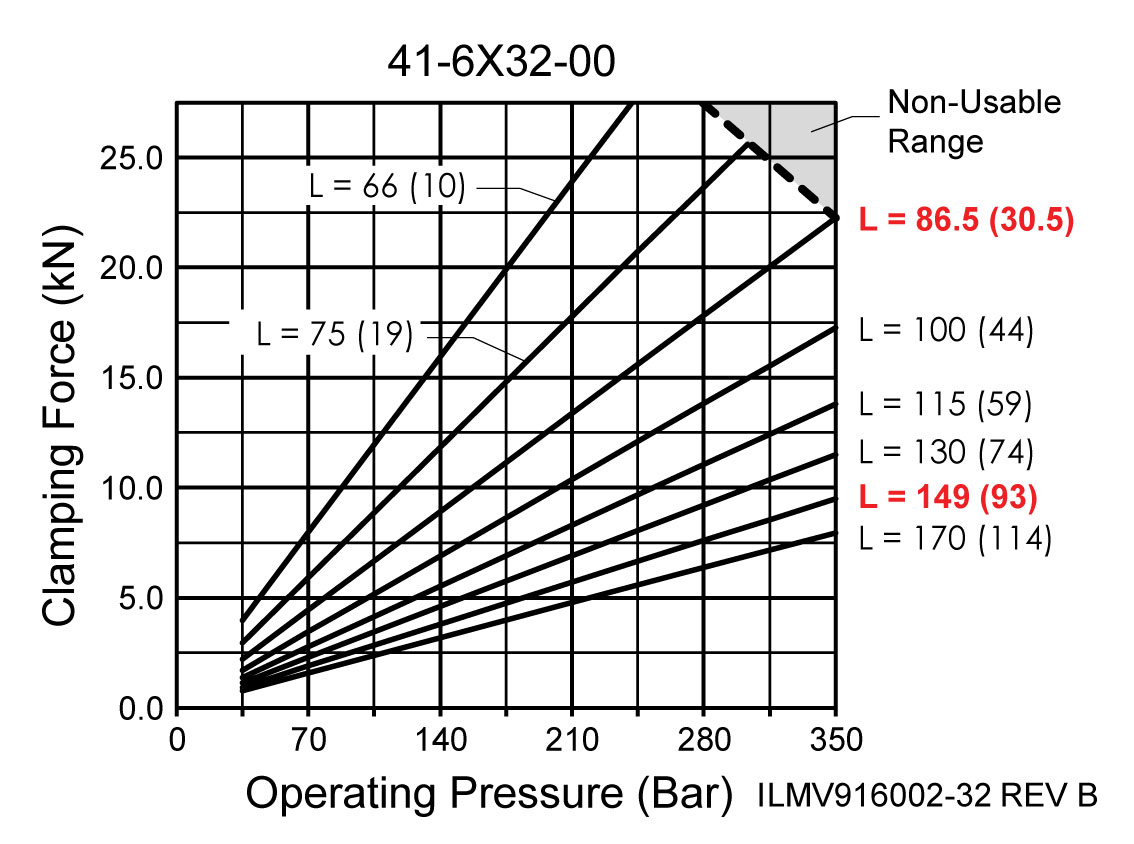
41-6X32-00
FAQs
Browse our most Frequently asked questions and if you have an issue that isn’t covered here, reach out to our product support team below.
What benefit does the rotary lug offer?
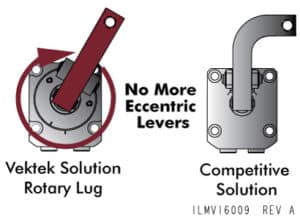
The rotary lug on TuffLink™ allows the clamping lever to be positioned anywhere, 360°, around the mounting flange. This feature helps in the design phase of a fixture by simplifying feed hold drilling when manifold mounting. The body can be rotated into optimal alignment with drilled passages. Just rotate the body so the manifold mount ports align with gun drilled feed holes. This feature also saves time and money after the fixture is built by allowing great flexibility for last minute adjustments in work piece design, casting variations.
How is the rotary lug better than the eccentric levers offered by the competition?
Never derate a Link Clamp again due to an offset lever design. The clamp lever can now be rotated to adjust for part changes or last minute variations. Because it maintains symmetric loading on levers, pivots and pins, clamp life is vastly improved and failures eliminated.
How do I adjust the position of the rotary lug?
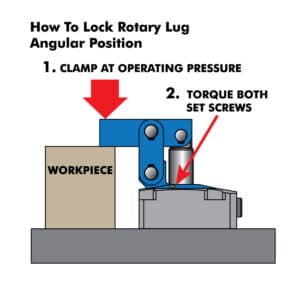
Rotary adjustment is easy, just loosen the two set screws near the pivot on the rotary lug. Use a wrench on the end of the lever to rotate lever to desired orientation and torque set screws. We recommend torqueing the set screws while clamping over a work piece at operating pressure.
When should I use a TuffLink™ clamp?
A TuffLink™ clamp is often preferred when you must reach over, not swing over or around a height obstacle and need full lever rotation to set points. Reaching down into a die casting, between two mounting lugs, or a direct overhead vertical load are good examples where these devices are required. Keep in mind that the vertical clearance must be greater when you are bringing a part into position, but direct drop in loading is easily accomplished by an operator or robot.
What is the vertical stroke of a TuffLink™ 360° clamp?
The maximum part variation is included in the vertical stroke. When outside the vertical stroke specification, the force generated by the clamp will be reduced and may result in reduced clamp life. You may find vertical stroke specifications with the clamp details.
When should I avoid using a link clamp?
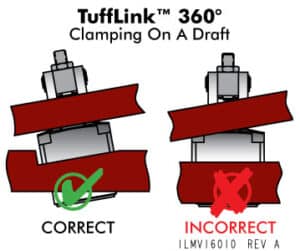
If you are clamping on a draft angle, the angle will exert undue stresses on the linkage mechanism. Make sure the clamp mounting flange and lever are parallel to the clamping surface. Avoid stressing guidance mechanisms of either swing clamps or link clamps as these stresses will cause premature failure not covered by warranty due to misapplication. The drawing below will help you handle clamping on a draft angle.
What is link clamp lever clamp angle?
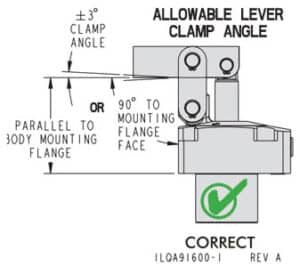
It is the angle of the clamping lever contact surface measured from the body mounting flange surface to the work piece contact surface of the clamping lever.
What is the acceptable lever clamp angle when clamping my work piece?
Levers should be designed and contact bolts should be adjusted so that the lever contact surface is within ±3° of parallel to the body mounting flange or 90° to mounting flange face when clamping a work piece. Use a digital angle finder or angle finder app on your smart phone to measure the angular position of the lever.
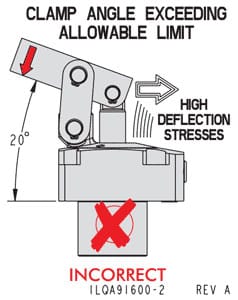
I want to clamp a work piece with my lever at 20° from the mount flange, will it cause damage to the linkage mechanism or piston rod?
Yes, a lever angle of greater than ±3° of parallel to the body mounting flange will cause excess force on the linkage mechanism and piston rod. Rapid, premature failure will result from excessive bending stresses in the rod. The lever must be positioned within the acceptable angle discussed in the second question.
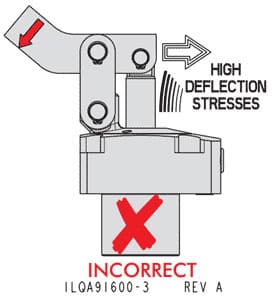
I've designed my own custom lever with the work piece contact surface at an angle to the clamp mounting flange. The lever shape also makes it parallel to the clamp mounting surface where it pins to the clamp linkage and plunger. Is it safe to use this lever?
No, it is not safe to use the lever shown below. Even though the shape of the lever has a portion that is parallel to the clamp mounting flange, the work piece contact surface is not parallel to the mounting flange. When clamping, the reaction force will put a force vector into the piston rod causing excessive bending stress and deflection. The work piece contact surface must be parallel to the body mounting flange within ±3° .
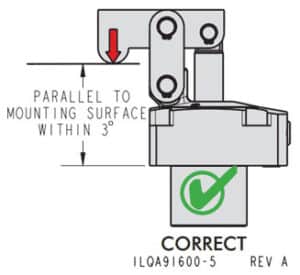
I want to use a radius contact point on the end of my custom lever, what guidelines can you give me?
Position the clamp so that its mounting flange is parallel to the work piece contact surface within ±3°. Positioning the clamp so that the mounting flange is at an angle greater than 3° to the work piece contact surface with cause excessive bending stresses to the rod resulting in premature failure.
I want to use an extended length lever, will I need to pressure reduce my link clamp similar to pressure reducing a swing clamp when using a long arm?
Link clamps can be operated at maximum operating pressure when extended levers are used. Assuming constant clamp pressure; increasing the distance between the contact point and link pivot or fulcrum creates less clamping force and less internal stresses in the linkage and pins. Reducing the distance between the contact point and link pivot produces greater clamping force and increased internal stresses in the linkage and pins. Therefore, if a shorter than standard length lever is used, the link clamp must be pressure reduced to avoid damage to the linkage mechanism. See the clamping force tables and graphs for the allowable lever length and operating pressure combinations.